
Subcategories
A Article Count: 4
B Article Count: 13
C Article Count: 15
D Article Count: 4
E Article Count: 3
F Article Count: 6
G Article Count: 6
H Article Count: 4
I Article Count: 1
J Article Count: 5
K Article Count: 3
L Article Count: 5
M Article Count: 12
N Article Count: 3
O Article Count: 2
P Article Count: 7
R Article Count: 2
S Article Count: 16
T Article Count: 6
W Article Count: 14
Robert Maclennan (Lord Maclennan of Rogart)

Robert Maclennan was a politician of exquisite paradoxes: a man of immense principle and steadfastness and yet lacking in political judgement on a great many individual issues. He was a man who had a deep appreciation for the fine arts and for music and yet he gave the appearance of stern aloofness. He was manifestly shy and was nervous about difficult speeches but his commitment to deeply held beliefs forced him to step forward. He was possessed of a deep sense of duty which impelled him into politics; but, in reality, he was never a natural politician. Even the fact of being known to most friends and colleagues as 'Bob' was slightly curious - his serious demeanour and his lawyer's forensic approach would more naturally have suggested 'Robert'. The final paradox was that having defeated George Mackie, the sitting Liberal MP for Caithness & Sunderland,1 in a hard-fought campaign, by the slender majority of just sixty-four votes in 1966, the two became friends and allies, particularly as Liberal Democrat colleagues in the House of Lords.
To his family, friends and those who worked for him, Bob Maclennan was clearly a warm and personable individual, and all the personal comments following his death bear this out. It is when one has to assess him as a politician, particularly in that highly fraught period following the 1987 general election, that the difficulties arise.
The Butler and King book on the 1966 election2 described Bob Maclennan as the ideal Labour candidate for the massive and sprawling constituency of Caithness and Sutherland. In addition to Maclennan's appeal to the Scottish respect for lawyers,3 his father was a respected and titled gynaecologist and the family had an association with the little Sutherland village of Rogart. He was helped by the development of the Dounreay nuclear power station in the constituency which produced an influx of working men more inclined to vote Labour. He later remarked to a colleague that had he not won in 1966 he would have given up the idea of a political career.
Within a year he had gained the first step in a parliamentary career by becoming parliamentary private secretary to George Thomson, Commonwealth Secretary, followed by two junior ministerial posts. He was a consistent and committed supporter of British entry into the European Common Market (the European Economic Community (EEC)), later the European Union, and was one of the sixty-nine pro-Europe rebel Labour MPs, led by Roy Jenkins, who in 1971 voted for Edward Heath's paving bill to join the EEC, against the Labour whip. At the time he was committed to remaining within the Labour Party and hoped that Roy Jenkins would gain the leadership. In 1973, Dick Taverne, Labour MP for Lincoln, had finally made up his mind to resign from the party and to force a by-election (which he won) but he states that, at the last minute, Bob Maclennan 'came perhaps nearest of anyone to shaking my determination, with his quiet but forceful arguments'.4
In 1979, after Labour's defeat in the general election - as the party continued its slide to the left and the efforts to manipulate the rules for the election of the party leader - Maclennan was an early supporter of Jenkins' moves to set up what became the Social Democratic Party, although he did make an approach to join the Liberal Party, being 'strongly discouraged' by David Steel.5 Although, according to David Owen he vacillated over leaving Labour, he was one of the first tranche of Labour MPs to join the SDP on its formation in 1981 and was on its steering committee.6 He was the chief architect, together with William Goodhart, of the SDP's constitution, skilfully drafted to maintain a balance between the rights of MPs and of party members. Many features of the SDP constitution - some may say too many - were imported into the Liberal Democrats' constitution seven years later.
He easily held his seat at both the 1983 and 1987 elections and played an active role in parliament as an SDP and an Alliance spokesman; but it was in the struggles over the creation of the merger between the SDP and the Liberal Party, following the 1987 election, that Maclennan demonstrated the personal and political dilemmas that manifested the different aspects of a tortured personality, torn between a duty to his party and a need to follow his conscience. In effect he went from being the SDP MP most opposed to merger - even including David Owen - to being the party leader who, in effect, forced it through.
David Owen's relationship with Roy Jenkins, Shirley Williams and Bill Rodgers - his three colleagues in the SDP's Gang of Four- was always fraught, largely because Owen believed that the party should have a distinct focus and thus lead the political agenda, whereas the other three saw that the only way to change politics was to work closely with the Liberals. As leader throughout the 1983-87 parliament, Owen single-handedly drove the party with remarkable energy and attention to detail; however, following the disappointing result of the 1987 election, Owen regarded David Steel's attempt to bounce the two parties into a single, merged entity as unacceptable. With his parliamentary colleagues John Cartwright and Rosie Barnes, he set about ensuring that the SDP would stay out of the merger even though the vote of SDP members over the summer had favoured merger, and resigned as leader in August after the result of the vote was declared. He encouraged the SDP to split so that those who favoured merger with the Liberals could do so, while those who, like Owen, wished to have a separate SDP still had a political home. This left just two SDP MPs, Charles Kennedy, who favoured merger, and Bob Maclennan - who had opposed it but accepted the party vote - out of his calculations. Owen calculated that, as the SDP constitution laid down that the party leader had to be a member of parliament, neither of them would take this on, thus leaving him a clear run. However, Charles Kennedy urged Maclennan to take on the role. He agreed and, after the Liberal Assembly had agreed to the principle of merger in September, opened negotiations over the form of the new party.
Maclennan was seen by everyone as a committed opponent of merger with the Liberal Party. David Owen saw him as 'robustly opposed to merger' and states that Maclennan told him that he 'would leave politics rather than join a merged party'.7 Crewe and King in their definitive book on the SDP describe Maclennan as 'speaking out more vigorously against merger than anyone else.'8 What turned Maclennan into the leader determined to create a merged party - as far as possible akin to an 'SDP Mark 2'? First, it was, typically, a matter of conscience and loyalty to accept the party's vote and to take on its mandate; but, secondly, and much more significantly, it became increasingly apparent that his aim was to produce from the negotiations a party that would be sufficiently aligned to David Owen's well-known blueprint for the SDP as to bring him back into the mainstream and thus enable the third force to succeed. This personal Maclennan crusade was not apparent to the negotiating teams at the beginning and, in fact, it only began to dawn on the Liberals when the SDP were insisting that the inclusion of a commitment to the UK's membership of NATO had to be included in the new party's constitution, which would itself be modelled on the SDP's original version, as largely drawn up by Maclennan. His aim was exposed publicly in the evening of 18 January 1988, immediately after the successful conclusion of three and a half months of negotiations, by his capricious and perverse sudden expedition - accompanied by the hapless Charles Kennedy - to Owen's home to beg Owen to join the new party. If he had had even a modicum of political judgement, he would have known that this was bound to be a fruitless mission that would humiliate him and his cause.
Maclennan was completely unsuited to the rough and tumble of leadership and the unremitting demands it made for immediate comment and for maintaining a semblance of unity amongst unruly and unhappy colleagues. And the need to lead the SDP team in the inevitably incendiary and perilous merger negotiations with the Liberals multiplied his problems. Comments at the time and subsequently were unkind but accurate. Alan Beith described him as 'an awkward speaker, not an obvious leader, and a difficult and strangely emotional negotiator.'9 Shirley Williams said that he was 'thin skinned … not cut out for the sour and savage politics of the 1980s.'10 David Steel was more diplomatic, saying that he 'belonged to a more genteel era.'11 Des Wilson was typically forthright: 'The SDP elected Robert Maclennan as their leader, a bizarre choice … an uptight, tortured-looking character, [who] had no leadership qualities whatsoever.'12 At the end of it all, David Owen commented, 'the embarrassment of Bob's leadership [is] mercifully over.'13
Maclennan's behaviour during the almost four months of negotiation was sometimes very strange and occasionally bizarre. He swung between giving ultimatums and suddenly giving way. There were even genuine concerns about his mental stability. When the former MP John Grant resigned from the SDP negotiating team late in the process, saying that there was 'no meeting of hearts and minds',14 Maclennan broke down in tears and said, 'I can't go on.' He then walked out slowly, followed one by one by the rest of his stunned team.
When the constitutional details were completed, including the controversial preamble, NATO and all, there remained the question of a joint policy statement as a key accompaniment, which had, in effect, lain on the table during the long negotiations on everything else. The Liberals were relaxed about this, delegating it to the two leaders, believing, with the experience of the joint 1987 election manifesto, that an acceptable document could be put together swiftly with a consensus of the negotiators on board. This proved to be exceptionally naive. Maclennan laid great store by this document, which he saw as the means of setting out an Owenite prospectus that would draw Owen into the party. Two aides were tasked with writing a forthright policy statement. They consulted widely and, at this point no alarm bells rang to disabuse the Liberals from believing that the outcome would be broadly acceptable. In any case, David Steel would have to sign it off and would thus prevent anything unacceptable appearing. This view did not take into account Steel's notorious antipathy to giving detailed attention to lengthy policy papers and the final document was thus essentially a Maclennan draft. Once key Liberals had seen it, they immediately realised that much of it was completely unacceptable, including a hawkish defence policy, the extension of VAT to children's clothing and support for civil nuclear power.
Maclennan refused to accept this and insisted that it had to go forward, making various threats, including that he would present it alone. Eventually he was forced to realise that his document was not acceptable, whereupon he collapsed into tears and had to be physically prevented from leaving the meeting. It took Charles Kennedy twenty minutes to calm him down in a quiet corner of the room and to persuade him that another document could be quickly written that would keep merger on track. Three senior members from each side produced a somewhat more anodyne version, and thus the whole process to form the merged party was finally signed off - and Maclennan called John Grant to ask him set up an immediate meeting with David Owen. Grant got the impression from Maclennan that he was about to reject the whole package and duly briefed Owen along this line. To Owen's astonishment, Maclennan's mission was to commend the package to Owen and to invite him to sign on to it. After a few brief minutes Maclennan and Kennedy were shown the door and a furious Owen immediately briefed the press on what had transpired, saying that the visit 'reeked of insincerity'. Owen believed that Maclennan was close to a nervous breakdown.15
The merger was concluded with votes of both parties in January and February, and the Social & Liberal Democrats was formally launched on 3 March 1988. Maclennan announced that he did not intend to be a candidate for the leadership of the new party and became a loyal supporter of Paddy Ashdown. He embarked on a much more congenial and productive role in parliament and in the party. He was elected as party president in 1994 and was a key figure in the development and success of the party in the country. In parliament he became the party's spokesman on the arts and on home and constitutional affairs - both subjects on which he had personal interests and practical views. Above all, Ashdown used Maclennan for what was one of the very few benefits that came out of his relationship with Tony Blair. He was appointed to work with Robin Cook on constitutional reform proposals. These were launched in March 1997 and included freedom of information legislation, devolution to Scotland and Wales (with proportional representation elections), an elected authority for London, removal of the hereditary peers from the House of Lords, proportional representation for the European Parliament elections, and a referendum on voting reform for Westminster elections.16 Most of these were enacted after Labour's victory in 1997, and Maclennan joined the Joint Cabinet Committee reviewing a range of constitutional items.
Bob Maclennan retired from the House of Commons in 2001 after thirty-five years as the MP for his huge Highlands constituency. It was a tribute to his relationship with his constituents that he was elected under three different political labels. He was immediately created a Liberal Democrat life peer and continued to use his interests and experience in European matters.
The trials and tribulations he suffered in the later years of the SDP were certainly uncongenial for such a thoughtful and gentle man, but they stemmed directly from his sense of duty. A senior party officer shrewdly said of him that 'his career has often been more successful than visible' and that he was 'more of a renaissance man than a career politician.'17 Shirley Williams described him as 'a serious man and an extraordinarily conscientious one.'18
His last years were blighted by dementia but he will be remembered as a friendly, intelligent and sensitive colleague and friend.
Robert Adam Ross Maclennan, Lord Maclennan of Rogart, born 26 June 1936, died 18 January 2020. Married 1968 Helen Noyes (née Cutter) who survives him, as do their children, Adam and Ruth, and a stepson, Nicholas.
1 The constituency had been held from 1922 to 1945 by the former Liberal leader, Sir Archibald Sinclair, later Lord Thurso, and was held following Maclennan's retirement in 2001 through to 2015 by John Thurso, the grandson of Archibald Sinclair.
2 D. E. Butler and Anthony King, The British General Election of 1966 (Macmillan, 1966), article on the constituency by Ian Grimble.
3 He had been called to the Bar, Gray's Inn, in 1962.
4 Dick Taverne, The Future of the Left: Lincoln and After (Jonathan Cape, 1974), p. 84.
5 David Torrance, David Steel: Rising Hope to Elder Statesman (Biteback, 2012), p. 136.
6 David Owen, Time to Declare (Joseph, 1991), pp. 203, 472 and 487.
7 Ibid., pp. 709 and 726.
8 Ivor Crewe and Anthony King, SDP: The Birth, Life and Death of the Social Democratic Party (OUP, 1995), p. 388.
9 Alan Beith, Alan Beith: A View from the North (Northumbria University Press, 2008), p. 114.
10 Shirley Williams, Climbing the Bookshelves (Virago, 2009), p. 316.
11 Torrance, David Steel , p. 236.
12 Des Wilson, Memoirs of a Minor Public Figure (Quartet Books, 2013), p. 248.
13 Owen, Time to Declare , p. 736.
14 Rachael Pitchford and Tony Greaves, Merger - The Inside Story (Liberal Renewal, 1989), p. 95.
15 Owen, Time to Declare , p. 738.
16 Robin Cook and Robert Maclennan, Looking Back, Looking Forward: The Cook-Maclennan Agreement on Constitutional Reform, Eight Years On (New Politics Network, 2005).
17 Helen Bailey, entry for Robert Maclennan in Duncan Brack (ed.) Dictionary of Liberal Biography (Politico's Publishing, 1998).
18 Williams, Climbing the Bookshelves, p. 316.
David Morrish
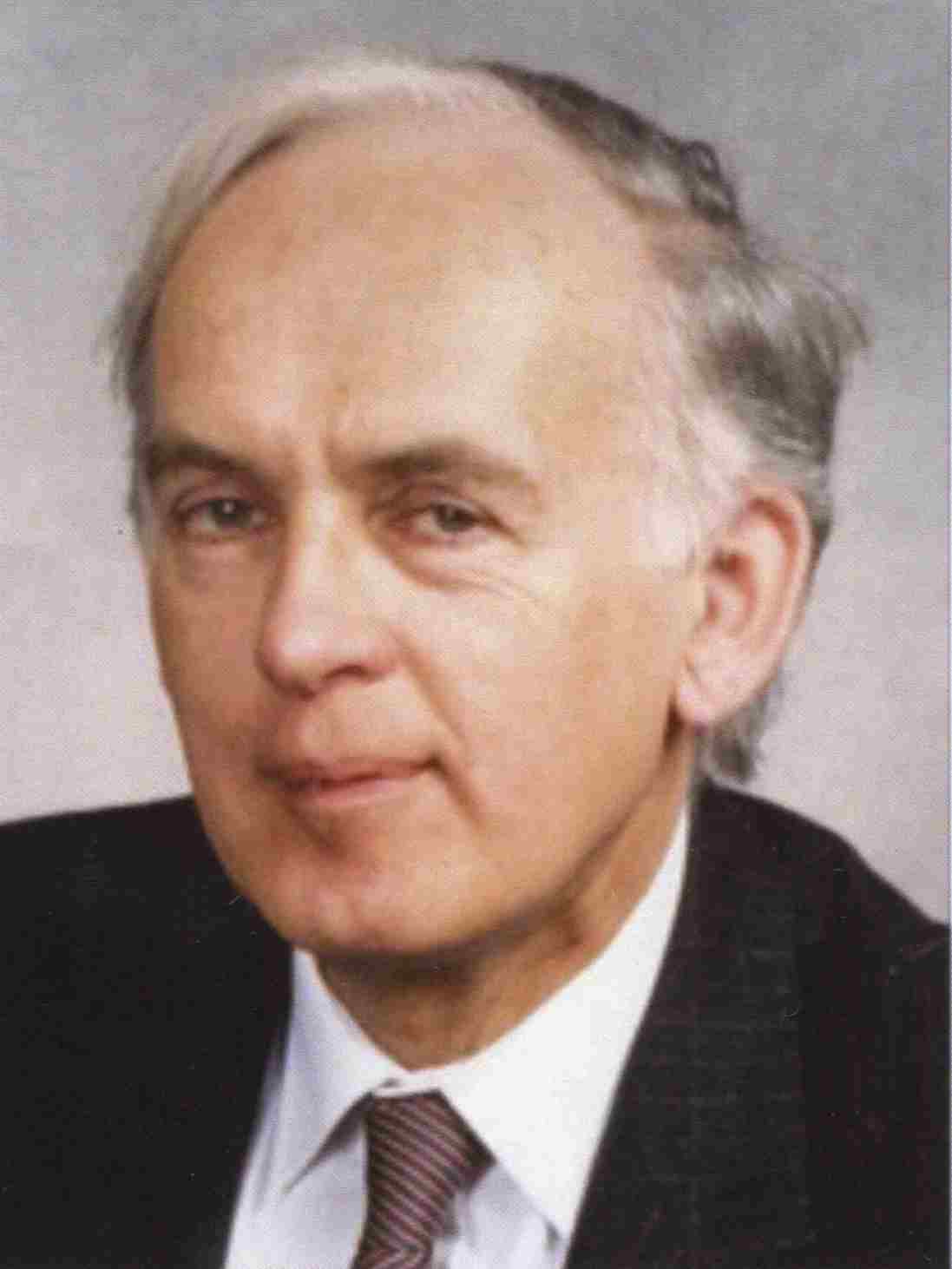 My friend David Morrish, who has died aged 86, was a committed Liberal and local politician. He combined warmth and oratory with a quick smile and a telling anecdote - all delivered in his attractive Devonian burr - which ensured his constant election over 50 years from the same community on the Exeter city council or the Devon county council. David also unsuccessfully contested nine parliamentary elections, plus one European parliament contest.
Although David's main political activity was focused on local government, he was a passionate internationalist. This was very much of a piece with his attachment to the Society of Friends as was his support for the peace movement. In 1956 he refused to do national service, instead choosing to register as a conscientious objector.
David was also a supporter of electoral reform, and specifically the single transferable vote. He told me, after we met through the Liberal party in 1962, that he had joined what is now the Electoral Reform Society as a teenager, even before he had joined the Liberals in 1956.
In 1987 David and I found ourselves in a minority within the party, opposing the leaders' proposal to form a merged party with the Social Democrats. Rather than abandon the cause we became part of a small continuing Liberal party, huddling together for mutual warmth and comfort. Some 20 years later I made the decision to join the "mainstream" Liberal Democrats but, typically, David remained loyal to the "mighty handful" to the end of his life.
He was born in Plymouth, son of Gwendoline (nee Opie), who worked in a stationers, and Frank Morrish, a shipwright, and attended Sutton high school, Plymouth. He obtained his degree in geography and geology, then a teaching qualification and a master's, at Exeter University. He received a Rotary Foundation fellowship for further study abroad, and went to Wisconsin University in the US, returning to Exeter in 1956 at the age of 24.
His first job was with the UN in Iran later that year. He taught temporarily at Bromley grammar school, but his first - and last - teaching post was as a geography tutor at St Luke's College, now part of Exeter University, where he stayed from 1959 until his retirement in 1990. His professional life was as an educator, particularly in the training of teachers.
He was a member of Exeter city council from 1961 until 1974 and 1996 until 2011, and a member of Devon county council from 1973 until 2004. He fought the Exeter constituency in 1970, in February and October 1974, and in 1997 and 2001; and Tiverton in 1979, 1983, 1987 and 1992. His service was recognised by being made a freeman of the city of Exeter in 2011.
His wife, Joan (nee Squire), whom he married in 1959, was also a firm Liberal and an Exeter city councillor. She died just six weeks after David. They are survived by a daughter, Claire, and a granddaughter, Emma.
Mary Ness
 Mary Ness, a stalwart of the Leeds Library has died aged 87. She joined the Library in 1992 having bought share number 382 in the days when it was still a proprietory library and before it became an open charity in 2008. Mary was a committee member from 1997 and continued as a Trustee of the charity until 2017. She was also one of the select group of library members who made loans to it to assist the purchase of the new building. She was a forthright member of the Library’s book group and was never reticent at expressing her views on books being read, or, indeed, on her fellow members.
By profession she was a nurse and it was at a Leeds hospital that she met her husband, anaesthetist Alan Ness from whom she was eventually divorced. Their two sons are both medics. I very much enjoyed her company and she was a very convivial lunch companion until her advancing arthritis inhibited her movements and latterly forced her to be housebound. Mary was a voracious reader until, latterly, as her eyesight deteriorated, she was unable to cope with print. This and her immobility hugely frustrated and depressed her, even to the point of considering making use of Dignitas.
Her peaceful death at home is a fitting end to a full, practical life, committed to causes she enjoyed and supported.
Honorary Alderman Brooke Nelson
 Leeds Honorary Alderman Brooke Nelson has died at the age of 84 after a short illness. He served as a Liberal councillor for the Armley ward from 1973 to 1983. He was a member of the Armley Common Rights Trust for some forty years, including serving as its Chairman. He also served for many years as a member of the Civic Arts Guild and the Leeds Children's Holiday Camp management committee.
Alderman Nelson was not often a contributor to City Council debates but he was as assiduous committee member. As an Armley man and a local contractor he knew the area exceptionally well and this enabled him to be a local ward Councillor respected for his attention to casework on behalf of his constituents.
He leaves a wife, Joan, a daughter, Kay, and a son, Mark.
Honorary Alderman Brooke Nelson. 19 June 1933 to 31 May 2017
Dadabhai Naoroji
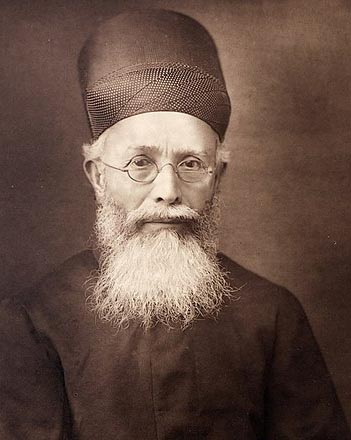 Unlike the majority of London clubs, the National Liberal Club (NLC) from its beginning welcomed Asian members and it was somewhat of an anomaly that hitherto all its portraits were of white British politicians. This has now been rectified with the acquisition of a commissioned portrait of Dadabhai Naoroji. He has a special place in British political history being the first Asian Member of Parliament when he was elected as the Liberal MP for the Central Finsbury constituency at the 1892 election, having fought Holborn unsuccessfully in 1886. Prior to coming to England he had been a distinguished academic and statesman in India, and was an advisor to Ghandi in his early years.
His agent at his successful election was the Club's first secretary, William Digby, who was a consistent agitator for Indian rights. Ironically Digby despite getting Naoroji elected, was himself twice an unsuccessful Liberal candidate in London. Naoroji narrowly lost his seat in the Conservative landslide of 1895.
When he joined the NLC in 1886 he was one of twelve Indian members. His Proposer and Seconder, W Martin Wood and Major Evans Bell respectively, were both prolific writers on Indian issues. Naoroji was a very active member of the Club and served on its General Committee for fifteen years, from 1890 to 1905.
Ed O’Donnell
 The jazz world is full of extremes of ages, from those who die criminally young such as Bix and, in the UK, Johnny Haim, to those who live - and play - into remarkable old age. Ed O'Donnell, who has died at the age of eighty-seven, was certainly one of the latter. At his death he had a programme of gigs extending well into the future.
He seemed indestructible and it is difficult to imagine the Yorkshire jazz scene without Ed O'Donnell. For almost seventy years, from 1946 to just a few weeks ago, Ed's trombone playing was an "ever present" in and around Leeds. His commitment to New Orleans jazz and to playing tailgate trombone from the early days of the revival of this great music right up to today's more depleted enthusiasts was legendary. There was hardly a venue in the Leeds area that Ed didn't play at, or a band he hadn't played with. What is more, listening again to his early recordings, one realises that his style and enthusiasm stayed pretty much the same over the decades. As he once remarked he was "trying to play like Jim Robinson."
Ed's first band in 1946 was the Vernon Street Ramblers, the name coming from the address of the Leeds College of Art where Ed was studying and, in fact, where he later worked for many years. He became a member of Bob Barclay's Yorkshire Jazz Band in early 1949 along with Dick Hawdon and fellow art college students Diz Disley and Alan Cooper, and recorded with them for Tempo. He left after two years and formed the Paramount Jazz Band and then led the Black Eagles Band.
Ed's brief claim to national fame came when Ken Colyer parted company with Chris Barber and the rest of the band that had been formed by Barber to welcome Colyer back from his illicit trip to New Orleans. Ed, and the pre-Acker, Bernard Bilk, were recruited by Colyer in June 1954. Ken's brother, Bill, knew of Ed and had written to him with information on the Guvnor's return. Fellow Leeds trombonist, Mac Duncan, aimed to be Ken's new bandsman but Ed landed the job. Ironically Duncan replaced Ed some months later at Ed's suggestion.
Ed has written that it was thought that he had taught Duncan whereas, "He taught me. He was far better." He was paid £6 a week with the Colyer band and they rehearsed every day in a studio near to Kings Cross. To survive financially most of the band shared a flat in Fulham, with Ken, Acker Bilk and Ed even sharing a bed!
Ed toured with Colyer for six months and then returned to Leeds. The disc "Back to the Delta" was produced whilst Ed was with Ken Colyer, (the session has been reissued by Paul Adams as part of Lake LACD 209). He didn't like London, "it was a drag," and, crucially important, "you can't get a decent pint of Tetley's further south than Wakefield."
Back in Leeds, Ed briefly led the White Eagles Marching Band before forming his own New Orleans Jazzmen which has continued up to the present day. Not one to suffer musical fools gladly, Ed was regarded with immense affection by the jazz public in the North of England who willingly forgave his peccadillos for the sake of his loyalty to the music and his willingness to turn out and help colleagues on every occasion. In September 2009, for instance, he turned out in the band at his old Yorkshire Jazz Band colleague's Dick Hawdon's funeral, saying, "I had to be here for Dick." Ed's regular signing off comment at the end of a gig was, "Remember the Ed O'Donnell band - it's the only game in town." For many jazz fans it was just that for very many years.
Ed had recently been ill and was awaiting further surgery. He had seemed ageless and will be much missed. His funeral was held in Leeds on 4th March. The band that led the procession to the crematorium was included members of Ed's current band, including Arthur Stead (trumpet), Tony Denton (clarinet), Jim Wright (banjo) and Annie Hawkins (bass) and was followed by a celebration at the Leeds Jazz Club. Everyone's sympathies are with his wife, Anne, whom he married in 1959, and his daughters, Frances and Kate.
Dominic Edward (Ed) O'Donnell, born 13 February 1927, died 14 February 2014.
Mike Oborski
 My long-standing political colleague Mike Oborski has died at the age of 60. Michael Maciek George Oborski held dual Polish and British nationality. He maintained his contact with his Polish family and, with his wife Fran, was in Poland when its final Communist government fell. In 1996 Mike became the Honorary Polish Consul for the West Midlands. His affinity and passion for Poland and its culture was always evident in the many duties and projects he took up. A passionate European, Mike was the organiser of the "Poland Comes Home" committee which campaigned for Polish membership of the European Union and of NATO.
Mike Oborski was an instinctive political animal. He fought his first election, unsuccessfully, in Worcester, at the age of 21. He was elected to the Hereford and Worcester County Council in 1973 and to the Wyre Forest District Council a few years later.
At the time of the Liberal/SDP merger in 1988 he joined the new party saying that he "thought he could live with it as the only practical vehicle to deliver some form of Liberalism." By the autumn of 1995 he had become disillusioned with what he saw as the illiberalism of the local Liberal Democrats and he rejoined the Liberal Party. In 2005 he took over from me as President of the ongoing Liberal Party.
When the Labour party lost overall control of the district council Mike was the leader of the three strong Liberal Group. Despite this being the smallest party group he was called upon by the parties to a "Rainbow Coalition" to take on the leadership of the Wyre Forest council, a position he held for two years. He was also Chairman of the Council on three separate occasions.
A teacher by profession he took early retirement in 1996 after 26 years service on an offer he said "only a fool would reject."
Mike was a very shrewd political operator who didn't miss a trick but was recognised as having great integrity. When, typically, Mike announced publicly at a council meeting in 2005 that he was about to undergo surgery for cancer of the colon, his political opponents were open with their sympathy. One Conservative Councillor commented that, "Mike is a giant in Wyre Forest politics and a gentleman to boot."
Together with Fran, also a local Councillor, he was prominent in the local hospital campaign that led to the election in 2001 of Dr Richard Taylor, parliament's only independent MP.
Down to earth and very approachable, Mike Oborski was always prepared to work with those of goodwill, whatever their politics, if it would bring improvements to his community and to his town.
He appeared to have recovered from his initial cancer only to find himself with cancer of the lung and liver. He is survived by his wife Fran, whom he married in 1968.
Mike Oborski, born 18 August 1946, died 11 February 2007
See also The Guardian.
Jack Prichard
 Jack Prichard, Labour Party activist and councillor, was the epitome of the solid, unassuming but determined Labour activist on which the party depended until the advent of new Labour and its emphasis on presentational skills attuned to the television age. Born in the Cross Gates district of east Leeds he won one of the rare scholarships to Leeds Grammar School. He went on to Leeds University where he achieved a Master of Commerce degree. He developed an early interest in politics and joined the Labour League of Youth where he met his future wife Doris.
His first job after leaving university was as Organising Tutor for the Workers' Educational Association in the Cleveland district, based on Redcar - a position to which he was seconded by Leeds University's Extra Mural Department. Some four years later Prichard returned full-time to the university department, as lecturer in Economic and Social History. As its name indicates, this department had and has a strong emphasis on working within the community, and, from his home in Wrenthorpe, near Wakefield, Prichard travelled across the West Riding to lead evening classes for miners and to teach at summer schools.
Jack Prichard was a pacifist and, at the outbreak of the Second World War, he became a conscientious objector and was despatched to work in lime quarries in Horton-in-Ribblesdale. As with many of his generation, the end of the war was the catalyst for Prichard to become immersed in politics and he acted as Denis Healey's agent in the Pudsey and Otley constituency. Between them they cut the majority to 1400 votes in what was regarded as a safe Conservative seat. He and Healey maintained a close friendship thereafter.
As with so many political figures, family life took somewhat of a backseat - a tendency which was not always appreciated by Prichard's wife Doris and his two sons, John and David. He toyed with the idea of standing for parliament but ultimately felt that it would entail too much of a sacrifice of family life. For similar reasons it was some time before he stood for election to Leeds City Council, initially in the Headingley ward, following his move there. In 1964 he was elected for the Osmondthorpe ward but lost his seat in the Labour debacle of 1968 when the party returned only twelve councillors out of the 99 seats on the city council. Prichard achieved the distinction of being the only Labour gain in the municipal elections the following year.
He remained as councillor for the same area of Leeds following local government reorganisation, retiring in 1982. Two years later the City Council recognised his service by making him an Honorary Alderman. He had been Leeds' Deputy Lord Mayor in 1978-79 and had also served as chairman of the Planning Committee.
Jack Prichard was no rabble rouser but invariably prepared his speeches carefully and always endeavoured to develop a logical case. One sometimes felt that he regarded the City Council meeting as another WEA class but his earnestness and sincerity were appreciated. Jack Prichard had few political enemies. Prichard was actively involved in the co-operative movement and for a time was chairman of the Leeds Co-operative Society's Education Committee.
Labour party politics in the late 1970s and the1980s were increasingly uncomfortable for Prichard, who found himself out of sympathy with the vociferous Left. Sent as a delegate from the Leeds North West party to the party conference with a mandate to vote for Michael Foot for leader he voted instead for his friend Denis Healey. The local Left caucus was not amused and responded by circulating a rumour that Prichard was threatening to join the Liberal party if he was not elected Lord Mayor.
Jack Prichard had a wide range of other interests including sport, music, walking and travel. Whenever possible Doris - known as Dot - accompanied him to political and social events and they were seen very much as a couple who seemed very comfortable with each other. His skill as a raconteur belied his somewhat serious demeanor, and he never ducked a political challenge. Jack Prichard was appreciated in Leeds civic life as an honest and dedicated politician. He struggled with Parkinson's disease for a number of years and died in a Headingley nursing home.
William John (Jack) Prichard, died 4 August 2004, aged 89.
Bill Pitt
for the Journal of Liberal History
 More personal obituaries of Bill Pitt are appearing in The Guardian and in Liberator. I am concerned here with the historical significance of the Croydon North West by-election on 22 October 1981 and of Bill's role in it. Bill was a long-serving, popular and convivial Liberal party member who was a member of a number of party committees. For a time he edited the party's internal briefing paper, Radical Bulletin. He was the prospective Liberal candidate for his home constituency of Croydon North-West which was, technically, a marginal Conservative seat with the Labour party almost but never quite succeeding in gaining it. By no stretch of the imagination could the Liberals have envisaged winning it in any "normal" circumstances, indeed Bill had lost his deposit at the previous, 1979, general election, though he polled 23% at the May 1981 Greater London Council election in the same constituency - a fact rarely acknowledged.
The Alliance between the SDP and the Liberal party was envisaged from the launch of the SDP in late March 1981 though not formally launched until the two parties' conferences that Autumn. Late in May 1981 Sir Tom Williams resigned his Warrington seat in order to become a High Court judge. The Liberals had always struggled to save their deposit in Warrington so it was perceived a good seat in which the SDP could test the water. Shirley Williams hesitated and eventually said "no", whereupon Roy Jenkins bravely stepped in and fought an excellent campaign, just failing to win by under 2,000 votes.
Robert Taylor, the Conservative MP for Croydon NW, died on 19 June 1981, just one month before the polling day in Warrington. The informal understanding between the Alliance parties was that they should take turns in fighting by-elections, hence Croydon was assumed to fall to the Liberals to fight. Immediately doubts were cast on this. First, Bill Pitt was thought to be a pedestrian candidate with a poor track record and incapable of winning. Second, Shirley Williams indicated her willingness to fight. Third, David Steel, as Liberal leader, indicated that he was in favour of Shirley being the candidate. Typically he failed to consult his party but tried to bounce it into accepting Shirley Williams. Steel always neglected the party which he did not rate as at all important1 and he paid the price on this occasion. The quarterly Liberal Party Council meeting in Abingdon passed a resolution overwhelmingly affirming the party's support for Bill Pitt as the by-election candidate. I met with David Steel the Tuesday after Abingdon and asked him what he intended to do. He replied, "I suppose I'll have to bow to democracy"! Had he chatted up the party immediately the seat became vacant and had he had a better relationship with it, he would have probably convinced it - and Bill Pitt - to give way. This incident rankled with Steel ever after.2
Bill duly continued as the candidate. Shirley Williams and the SDP loyally campaigned for him and he won a remarkable victory on 22nd October. The point was well made that if the Alliance could win a by-election in a Conservative-Labour marginal seat with a non-celebrity candidate it augured well for its electoral future. His tenure was shortlived and he lost the seat in May 1983. He moved to Kent and fought, unsuccessfully, Thanet South in 1987 and 1992. He then, somewhat perversely, joined the Labour party.
There was a sub-text to this whole episode. Some of us in the Liberal party were determined to protect the party against the SDP. In 1981 and early 1982 there was a real danger that the SDP would dominate the Alliance and, through by-election successes, run away with it to the detriment of the whole status and future of the Liberal party. Hard on the heels of the Roy Jenkins near-miss in Warrington, an SDP victory in Croydon would have provided a real springboard for other victories and the possible eclipse of the Liberal party. I was always immensely relieved that sitting Labour MPs who defected to the SDP did not resign and fight by-elections, starting with David Owen and Bill Rodgers, to be followed by each of the twenty-six further defectors. In my view Own and Rodgers would have won and created a real momentum for most of the rest. This was not simply a narrow loyalty to the Liberal party for the sake of it; my philosophical and policy reasons were set out in a booklet published at the time.3
There is also a postscript to Bill Pitts and Croydon by-election. On 1st October 1981 the MP for Crosby, Graham Page, died. In his chapter in the 2010 book 4 David Steel states that the Liberal candidate, Anthony Hill, "graciously stood down" for Shirley to fight and win the by-election. That is not the case. When the news of Page's death became public, the rolling SDP conference had reached Southport. I was talking to Anthony Hill, the prospective candidate for Crosby, in the bar adjacent to the conference hall when we heard Shirley Williams announce from the platform that she intended to fight the by-election. Anthony, a loyal Liberal of twenty years standing was simply pushed aside, but felt that it would be futile to try to "do a Croydon".
1 See Steel's autobiography, Against Goliath, Weidenfeld & Nicolson, 1989, p135.
2See his chapter in Making the Difference - Essays in honour of Shirley Williams, ed Andrew Duff, Biteback, 2010, page 69.
3 Social Democracy - Barrier or Bridge? Liberator Publications, 1981. (Available as a pdf via www.bramley.demon.co.uk/liberal.html).
4Ibid p 69.
Bill Pitt
Liberator obituary
Bill Pitt was a popular and convivial Liberal party colleague. For a decade and more he was very much one of "the club" of Liberals of like mind who campaigned together and socialised together. For a time he edited Radical Bulletin, then a separate internal party briefing journal. On occasions when it did not appear he always had an excuse, sometimes blaming problems with his local post office, but it was suspected that he had simply not prepared it! He had joined the party in the 1960s after, rather curiously, a few years in the Norwood Young Conservatives. He became a member of a number of party committees and was well known and liked around the party - a fact that stood him in good stead when it came to the Croydon North West by-election of October 1981.
Bill had fought the three previous general elections in Croydon North West, losing his deposit in the most recent, 1979, contest. He had, however, polled more respectably - 23.7% - in the May 1981 Greater London Council election in the identical seat. Croydon North West was technically a marginal seat with the Labour party almost but never quite gaining it from the Conservatives. In normal circumstances the Liberals could not have envisaged winning it but the circumstances when the MP died in June 1981 the situation was entirely different. The SDP had been launched three months earlier with great fanfares and an immediate public response. An alliance with the Liberal party was negotiated and when an unprepossessing by-election vacancy occurred in Warrington. Roy Jenkins bravely took it on for the SDP-Alliance and failed to win by under 2,000 votes.
Although the understanding was that the two parties should fight by-elections alternately but when Croydon came up, Liberal Leader David Steel, made public his wish that Shirley Williams should be the joint candidate. With Bill's electoral record he regarded him as a loser. As he records in his memoirs, David Steel never had much time for the party, and rather than preparing the ground by persuading party officers of the good sense of the proposal, he simply tried to bounce the party. Inevitably, the party responded by backing Bill. A party council meeting in Abingdon overwhelmingly affirmed its support for him as the candidate and he was duly nominated. This internal defeat rankled permanently with David Steel, but Shirley Williams and other SDP leaders loyally backed Bill and he won a remarkable victory on 22 October 1981, becoming the first Alliance MP to be elected as such. The point was well made at the time that if the Alliance could win a by-election in a Conservative-Labour marginal seat with a non-celebrity candidate it augured well for the future. It turned out to be Bill's fifteen minutes of fame and he lost the seat in May 1983. He was somewhat complacent about holding the seat and he spent more time on parliamentary business than was conducive to local success.
There was an important sub-text to Bill Pitt and Croydon North West. Myself and a number of party colleagues were concerned to safeguard the future of the Liberal party against an over-weening dominance of the SDP within the Alliance, which was a real possibility at the time. I wrote a booklet at the time on the philosophical challenge to Liberalism of a resurgent social democracy but the possibility of electoral eclipse was more immediate. An SDP victory in Croydon, following on the heels of Roy Jenkins' near miss in Warrington, would have created an SDP momentum of great danger to the party. Bill Pitt's victory was therefore of wider significance.
Subsequently he and his wife Janet moved to Kent and he fought Thanet South unsuccessfully at the 1987 and 1992 general elections. Thereafter he, rather perversely, joined the Labour party for whom he unsuccessfully fought local elections.
The postscript to the inauspicious attempt to replace Bill Pitt by Shirley Williams in Croydon occurred when the next vacancy occurred, in Crosby, Merseside. David Steel records that Anthony Hill, the Liberal candidate in situ there, "graciously stood down." That is not the case! The news of the sitting MP's death became known when the SDP's rolling conference had arrived in Southport. I was standing in the conference bar talking to Anthony Hill while Shirley's voice addressing the conference came over the PA system announcing from the platform that she intended to fight the by-election! Anthony, a loyal Liberal of twenty years' standing, was simply pushed aside, but felt that it was futile to try to "do a Croydon."
Bill was raised by his mother in Brixton Hill, south London, and attended Heath Clark grammar school, Croydon, and the London Nautical school before studying for a philosophy degree at North London Polytechnic (now the University of North London). In 1961 he married Janet Wearn, an artist and teacher. They had a daughter, Janet.
He worked first as a lighting engineer, then as a housing officer for Lambeth council, and finally as group training manager at the Canary Wharf group in east London. On his retirement from full-time employment in 2003 Bill got involved with a number of local voluntary organisations, particularly to do with music and photography. He also became a newsreader for the Academy FM Thanet local radio station and became a mentor to newer recruits to the station's team.
William Pitt, born 17 July 1937, died 17 November 2017.
Recently added...
-
Menzies (Ming) Campbell
23 December 2025
 by Michael Meadowcroft Before politics Ming Campbell had successful...
 -
23 December 2025
Annette Brooke -
23 December 2025
Joiners and Leavers -
25 October 2023
Cause and Effect - the background to Hamas terrorism
