
Subcategories
A Article Count: 4
B Article Count: 13
C Article Count: 15
D Article Count: 4
E Article Count: 3
F Article Count: 6
G Article Count: 6
H Article Count: 4
I Article Count: 1
J Article Count: 5
K Article Count: 3
L Article Count: 5
M Article Count: 12
N Article Count: 3
O Article Count: 2
P Article Count: 7
R Article Count: 2
S Article Count: 16
T Article Count: 6
W Article Count: 14
Joseph Mellor

This enquiry led to my uncovering the remarkable history of Joseph Mellor, a member from 1920 until his death in 1938. The general impression of NLC members, past and present, is of a club that has attracted a preponderance of its members from the broad liberal arts - lawyers, writers, civil servants, artists and musicians, just as the world of politics has done. A much needed examination of the membership application forms would quantify the impression but certainly there have not been many visible scientists around over the years.
Joseph Mellor was, therefore, quite an exception, though by the time of his application, his position as Principal of the Central School of Science and Technology in Stoke-on-Trent rather masked his distinguished scientific career. Incidentally his proposer in 1920 was a rather shady individual, Rudd Chislett Rann, sometimes known as Chislett Rudd Rann! Rann himself had only been a member from 1916 prior to which he had been an entrepreneur who criss-crossed the Atlantic in following his business deals. In 1904, along with business colleagues, he had been sued in a New York court in relation to alleged "corruptly diverting" funds from share deals. He was acquitted by the court but there was no mention of his business background when he applied to the Club for membership.
Mellor was born in Huddersfield in 1869 and when he was ten the family emigrated to New Zealand. The family's poverty prevented him from continuing his education and at thi rtee n he was employed in boot making. However. in the evenings. by the light of a paraffin lamp. he studied borrowed chemistry books. The principal of the local technical school heard of him and. in effect, adopted him and aided his education. enabling him to enter the University of Otago in 1892 as a part-time student. Six years later he grad uated with Ist Class honours and took up a teac hing post. In the same year, 1898, he married the organist at the local Methodist chu rch and. later that year, they came to Engla nd. He earned his doctorate at Manchester University in 1902 and took up a teaching post at what was then the North Staffordshire Technical College. He became Principal of the College and in 1927 he was elected a Fellow of the Royal Society.
He published 116 papers and held six patents in clays, ceramics and, particularly, refractories. He became known as the leading authority in the UK on the chemistry and physics of ceramics. Between 1927 and 1937 he published a sixteen volume work amounting to 15.320 pages! - on inorganic chemistry. He eventually retired in 1934 and died in 1938. He stated that his relaxation was chess. which he no doubt practised with the Club's active Chess Circle.
Yet another remarkable personality who had been tucked away in the pages of the Club's history.
Min Marks

My friend Min Marks, a communist activist and wartime Bletchley Park associate, has died at the age of 100. She and her husband, Jack, who died in 2017 aged 98, were associated with virtually every peace movement, anti-racism and anti-fascist campaign in Leeds for over seventy years. Despite her own sturdy Communist affiliations Min was ecumenical in her attitude to political campaigns, happily working with all who shared the objective in view. She and Jack were essentially secular Jews and their support of the Palestinian cause inevitably brought difficulties with some members of the Leeds Jewish community. Min also cultivated a wide array of friends and was a very convivial hostess.
She was born in Leeds to Isaac Druyan, a presser, and his second wife, Rachel, née Israel, and attended Allerton High School. During the second world war she joined the ATS, (the Auxiliary Territorial Service) becoming an Intercept Operator, taking down encrypted German morse code messages that were then sent to Bletchley Park to be decoded. She is included on the Roll of Honour there and is commemorated on the Codebreakers' Wall. She became very skilled at Morse code and retained the ability to read it until very late in her life.
She married Jack in 1946 and thereafter they were both active in the city's Young Communist League. Unlike a number of Leeds party colleagues they remained in the Communist Party of Great Britain following the Soviet regime's crushing of the Hungarian party's revolt against the rigidity of Stalinist control, saying that the cause was more important than any individual's deviation from it. Min deplored the UK party's 1991 decision to disband and she and Jack then put their efforts into supporting the Communist party's daily newspaper, the Morning Star, which had been able to continue independently.
Min worked for many years for the Social and Market Research Company, RSL, as an interviewer, trainer and area supervisor, not retiring until well into her 70s. She was a fundraiser for a number of charities, particularly the Yorkshire PHAB (Physically Handicapped and Able Bodied), who put her and Jack's names on one of the PHAB minibuses.
She is survived by their three children, Ruth, Estelle and Anthony, five grandchildren and 12 great grandchildren.
Minnie (Min) Marks, née Druyan, born 12 December 1920, died 23 October 2021. Married Jack 2 July 1946.
Albert McElroy
 Albert McElroy’s oneness with a fellow Liberal was instinctive and mutual. He neither talked down to younger colleagues nor deferred to anyone in authority. This callow youth always looked forward to his regular visits to Brook House in the early sixties. I knew it would mean rigorous debate into the small hours, and Albert would pounce on any shallowness of logic or shading of principle. His gift was to take arguments on their merits, whoever propounded them, and he could be assertive without being arrogant.
I thought at first that he enjoyed the debate for its own sake but I eventually realised that that was not so and that, in fact, he wanted to test you to the limit and in so doing to test himself. Because of this he despised the simplistic bigotry of those who substituted prejudice for persuasion. I recall his satisfied chuckle after a meeting at which he, nominally a Protestant, had been heckled as a “papist”.
He was a considerable influence on those who came within his wide circle of friends and his presence at Liberal Assemblies was always appreciated as evidence of Liberal constancy within the most illiberal area of our islands.
He had one commendable defect: he could not comprehend the duality of human nature with its varied-proclivity towards evil. It was this obstinate refusal to acknowledge the possibility of malevolent motivation that eventually undermined his peace of mind and his will to fight on into the 1970s.
He saw, | think, the narrowing opportunity for promoting Liberalism within an insecure, unstable and violent society, and found himself emotionally and intellectually incapable of coming to terms with what he saw.
He was also hurt by the drift away from the Liberal cause of those who continued to profess their Liberalism. but who argued that the Liberal Party could not be the vehicle for those values. To Albert it was patently obvious that only the Liberal Party could profess Liberal values and he felt understandably frustrated and isolated at the burdens which were heaped on him.
Gordon Gillespie has written an excellent, and beautifully produced, memorial biography. So often a volume like this can be syrupy and can annoy the reader who knew the subject well. Gordon Gillespie avoids such pitfalls and evokes the flavour of Albert McElroy’s personality with considerable skill — so much so that it distressed me to be reminded of aspects of his struggle for honesty and political justice in Ireland.
I stayed at Brook House with Albert and Jan shortly before Albert’s death. He was a very different man to ten years earlier. He despaired of change in Ireland and could see no future for the values that were absolutely intrinsic to his personality and his life. I still feel, as I felt at the time, that Albert McElroy died of a broken heart.
My selfish thought after that last visit was that I regretted seeing him in such deep gloom. I now feel otherwise. His example, even in extremis, encourages me to fight on with greater determination, to maintain the conditions for Liberalism and to maximise Liberal influence.
I’m glad I knew Albert McElroy. He helped and encouraged me in more ways than he realised. He lit many candles without ever pondering whether the darkness would be dispelled.
David and Joan Morrish
Two stalwarts of west country Liberalism
 David Morrish was one of the very best of us. He had everything - an instinctive and innate Liberalism, considerable intelligence, great debating skills, always with a ready anecdote in his attractive Devonian burr, an immediate charisma and a political integrity and loyalty which meant that he had many opponents but no enemies. He was one of that band of Liberals denied a role in national politics by an electoral system that excludes all but a handful of Liberals from office. That he chose not to seek party office beyond the Devon and Cornwall Region was a loss to the Liberal cause. His death in February at the age of 86 brings a sense of what might have been.
David came from a Liberal background and his first taste of campaigning came as a fourteen year old in Plymouth in the 1945 general election. Also campaigning in that election was Joan Squire, a Liberal party member in Tavistock. She and David met at the Liberal Party Assembly in Ilfracombe in 1953 and they eventually married in 1959, with a courtship interrupted by David's year at Wisconsin University on a Rotary Foundation scholarship and time spent working with the United Nations in Iran. This latter post left him with a lifetime's interest in and concern for that country and its people. On his return to Exeter in 1959 his first - and last - teaching post was as a geography tutor at St Luke's College, now part of Exeter University, where he stayed until his retirement in 1990. His professional life was as an educator, particularly in the training of teachers. Their daughter, Claire, arrived in 1962 and a granddaughter, Emma, in 1996.
David's early personal involvement in Liberal politics in 1956 was even preceded by joining what is now the Electoral Reform Society and, just, by becoming a member of the Society of Friends in 1955. He retained a lifelong involvement with the Quakers and with the peace movement. He refused to undertake National Service in 1956 choosing instead to register as a conscientious objector and stating his willingness to serve in the Friends' Ambulance Unit.
My friendship with David began in 1962, the year after David had first been elected to Exeter City Council. I went to the city as part of my regular tour of Liberal council groups as the party's Local Government Officer. I stayed overnight with the Morrishs and found that we shared the same radical Liberalism. Exeter and the Morrishs became a regular convivial stop on future tours. David was a member of Exeter City Council from 1961 until 1974 and from 1996 until his retirement in 2011. He switched to Devon County Council from 1973 to 2004, all the time representing the same Heavitree ward. His fifty years service was recognised by being made a freeman of the city of Exeter in 2011. He recalled his first city council meeting when he had been advised not to speak and not to challenge the Mayor - he did both! He fought the Exeter constituency five times and the Tiverton seat four times. He also contested the Devon constituency for the European Parliament election in 1994. During my time in parliament, the Chief Whip, David Alton, told me with considerable astonishment, that a Liberal councillor had turned down a knighthood. Knowing how much such honours were often coveted, even by Liberals, I could understand his surprise. I went through possible names in my head and I came to the conclusion that it must be David Morrish. The next time I was with him, I looked at him with a sideways smile and asked, "Did you turn down a knighthood, David?" "Ah," he responded, "you'll have wait for my memoirs!" Alas, he only reached page 12 of his draft! I fear that the concept of memoirs was also somewhat un-Quakerly to David!
In 1985, to the Conservatives' huge surprise, they lost control of the Devon County Council for the first time in living memory. David set about putting together a three party coalition - Liberal, SDP and Labour. Eventually the Liberals and SDP put together a two-party administration, with Labour supporting from the wings. It proved to be a fractious blend and David survived as leader of the council for only two years. Interestingly David's somewhat naive but typically "pure" antipathy to having a group whip was a contributory factor in the joint administration eventually petering out.
In 1987 David and I found ourselves in minority within the Liberal party, opposing the leaders' proposal to form a merged party with the Social Democrats. At the special Liberal Assembly in Blackpool in December David made one of the better speeches against the proposal, telling delegates that, "Our constitution, preamble, membership scheme and name are worth fighting for .... they are not memorabilia but assets for the future fight." The merger proposal was inevitably passed with a large majority. Rather than abandon the cause we became part of a small continuing Liberal party, huddling together for mutual warmth and comfort. David typically held on to his Exeter ward seat, "without prefix or suffix" and his wife, Joan, won the next door ward. Together with two other Liberal party stalwarts they had a group of four on the city council. Some twenty years later I made the decision to join the mainstream Liberal Democrats but David remained loyal to the "mighty handful" to the end of his life. It was typical of the high esteem he was held by all that Ben Bradshaw, the Labour MP for Exeter, and a local Conservative Councillor visited David in his final nursing home and that Ben attended the funeral. His final years were accompanied by a great frustration at his increasing frailty.
Joan Morrish survived David by just six weeks. She was a Liberal Exeter City Councillor for the Barton and St Loyes ward for twenty years, eventually stepping down in 2012, and a Devon County Councillor for ten years.
David Morrish, 17 May 1931 to 14 February 2018
Joan Morrish, 18 July 1926 to 31 March 2018
Richard Moore
An appreciation written for the Journal of Liberal History

Few Liberal Democrat members today are aware how tenuous was the Liberal party's hold on electoral survival in the early 1950s and how indebted we are to Liberals such as Richard Moore, who has died aged 88. At the 1951 general election there were only 109 candidates, and 110 in 1955. At both elections the party returned just six MPs, five of whom had no Conservative opponent. It was the existence of a core of key individuals whose deep attachment to Liberalism, and whose awareness of its fundamental difference from both conservatism and to socialism, fuelled their determination to maintain an independent party and to continue to fight elections.
Though a number of this mighty handful of Liberals were survivors of the golden age of Liberalism, there were some young activists, including Richard. Born in 1931 he fought his first election in 1955 at the age of 24. In total he contested eight parliamentary elections between 1955 and October 19741, plus the 1984 European Parliament election in Somerset and Dorset West. Remarkably for the time he lost his deposit just once and this in unusual circumstances. Being deeply concerned at the increasing polarisation of Northern Ireland he believed it was important for the Liberal party to make a non-sectarian stance, and he contested the North Antrim constituency in 1966. Then, when in 1970 the Reverend Ian Paisley was nominated as a more extreme "Protestant Unionist" candidate, Richard regarded this as a dangerous and highly illiberal development and told the Liberal party national executive committee that it was vitally important that a Liberal candidate challenged him. There was a brief silence whereupon Richard added that, if no-one else was prepared to stand, he would do so himself. He packed a bag and went directly to Northern Ireland. He made powerful speeches condemning the bigotry of Paisley and his party - a stance which put him in physical danger from Paisley supporters. It was inevitably a quixotic fight and Paisley was duly returned with Richard fifth - and a lost deposit.
Richard was the son of a Baronet and had a somewhat torrid early education. However, he won an Exhibition to Trinity College, Cambridge in 1949, where he became President of the Union and anchored the Liberal Club. He joined the Liberal party in 1951 and went to his first Liberal Assembly in 1953, thereafter attending every year, including latterly Liberal Democrat conferences, until 2017. It is said that it was the existence of Jewish refugees from Hitler in the family home before the war that instilled a young awareness of the consequences of totalitarianism which imbued all his politics. It also gave him an affection for the state of Israel which remained with him, supporting it even when the idealistic principles that underpinned its origins were eroded by later more right-wing governments.
A modest legacy enabled Richard to take on a succession of relatively poorly paid jobs within the Liberal family. Soon after graduation he joined the Liberal daily, the News Chronicle, as a leader writer. When that folded in October 1960 he became secretary to the Liberal Peers and, later, his internationalism found expression in becoming adviser to the Liberal Group in the European Parliament2, in between two terms as Secretary General of Liberal International. His key role, however, was as Political Secretary and Speech Writer to Jeremy Thorpe on his election as Liberal party leader in 1967, a post he held for seven years. He was Thorpe's key aide throughout most of the turbulent years of the Norman Scott affair but he resolutely refused to comment on Thorpe's behaviour apart from the understatement that, "he was not very wise in his choice of friends." Even after Thorpe's death, when, over a recent lunch at the National Liberal Club, I gently tackled him about his papers from the Thorpe era he professed to have very few items still in his possession. Richard's time with Thorpe began at the time of the Young Liberals' "Red Guard" period when they were a thorn in the flesh of the party establishment; one of the first speeches he drafted was for Thorpe to denounce them as "Marxists." It was not a particularly diplomatic position for a party leader to take and I played a minor role in conciliating between the two sides. The episode led to the appointment of Stephen Terrell QC as chair of a commission to look into the situation. Inevitably its outcome was inconclusive, with majority and minority reports supporting the different sides.
Richard was a brilliant platform performer with some of the phrases from his perorations staying in the memory. I recall him enlivening the audience in London in the 1960s by telling them that the "Conservative party recently took over offices in Victoria Street for its research department. The name of the previous occupants is still on the office door: 'Activated Sludge Limited.' I can think of no better name for the Conservative party." Curiously there is only one publication extant under his own name, "The Liberals in Europe,"3 and his main literary endeavours appeared under others' names.
His dedication to the Liberal cause, combined with his oratory and his consistent presence at many party meetings, ensured his popularity but a number of his political positions increasingly estranged him from the evolving radicalism of the party. His passionate internationalism and the consequent support for European unity was certainly popular with Liberals, as was his opposition to strict immigration controls, but his visceral hostility to authoritarian regimes led him to oppose the Liberals' acceptance of some rapprochement with countries behind the Iron Curtain. In 1961 he prepared a policy statement for Liberal International, "Winning the Cold War", arguing that the ability to attack the Communist regimes was necessary and proposed that there should be a set period of conscription in all NATO countries. In the same year, when the Liberal party conference voted for de facto recognition of the East German regime, Richard told delegates that they were failing to show solidarity with oppressed people. The fraternal delegation from the party's German sister party, the Free Democrats, duly walked out and it fell to Richard to fly to Bonn to assuage them.
Much later, in 2003, Richard's consistency on opposing authoritarian regimes led him to disagree publicly with the Liberal Democrat MPs' united opposition to the invasion of Iraq. In essence Richard's political position had hardly changed throughout his career but, whereas he was on the radical wing of the party in his early days, the party had evolved into a generally more radical movement. None of his disagreements with the party ever troubled his loyalty to Liberalism and neither did party members ever doubt his commitment. Ironically it was a former Conservative Cabinet Minister and old friend, Sir Oliver Letwin, who summed up Richard best: Somehow the whole tolerant, civilised liberal disposition that is the greatest glory of our country seemed to have been distilled into its purest form and infused into him at birth."
He married Ann Miles in 1955 and she is a dedicated and active Liberal in her own right4 and was a Liberal and then Liberal Councillor on East Sussex County Council and Rother District Council for forty years. They had two sons, Charles, sometime editor of the "Daily Telegraph" and official biographer of Margaret Thatcher, and Rowan, and one daughter, Charlotte, both of the latter are also writers.
1 Tavistock, 1995 and 1959; Cambridgeshire, 1961 (by-election) and 1964; North Antrim, 1966 and 1970; and North Norfolk, February and October 1974.
2 Officially called "The Liberal and Democratic Group".
3 Unservile State Paper 20, Liberal Publication Department, 1974; {with detailed appendix by Christine Morgan).
4 See her entry in "Why I am a Liberal Democrat", ed Duncan Brack, Liberal Democrat Publications, 1996.
Richard Moore
Guardian obituary
My long-standing Liberal colleague, Richard Moore, has died at the age of 88. Richard was one of the few remaining party stalwarts from the 1950s whose understanding of Liberalism, added to a determination to promote it, ensured the Liberal party's survival when at times it seemed precarious. He told me that he had attended every Liberal Assembly and Liberal Democrat Conference from 1953 to 2017. His whole working life was occupied with various aspects of Liberalism, domestic or international.
Richard was the son of Sir Alan Hilary Moore and Lady Hilda Mary Moore, (née Burrows) who were able to give him a private education from which he won an Exhibition to Trinity College, Cambridge, to read history. At Cambridge he became President of the Union and anchored the Liberal Club. It is said that it was the existence of Jewish refugees from Hitler in the family home before the war that instilled a young awareness of the consequences of totalitarianism that imbued all his politics.
A modest legacy enabled him to take on a succession of relatively poorly paid jobs within the Liberal family. Soon after graduation he joined the Liberal daily, the News Chronicle, as a leader writer. When that closed in 1960, he became secretary to the Liberal Peers and, later, political secretary and speech writer to Jeremy Thorpe, on whose behaviour he studiously refused to comment, apart from the understatement that, "he was not very wise in his choice of friends." His internationalism found expression in becoming adviser to the Liberal Group in the European Parliament in between two terms as Secretary-General of Liberal International.
Richard was eight times an unsuccessful parliamentary Liberal candidate, between 1955 and October 1974. Remarkably for the time, he lost his election deposit only once, in 1970 when, believing that it was vital that a Liberal opposed the Rev Ian Paisley in Antrim North, packed a bag and did it himself. He also fought the 1984 European Parliament election in Somerset and Dorset West.
He was a brilliant platform orator and some of his phrases stayed in the memory for years afterwards but, surprisingly, there is only one publication under his own name, "The Liberals in Europe" in the 1970s. His main literary endeavours appeared under others' names. His Liberalism was on the radical wing of the party in the 1950s but became more establishment in later years. For instance, his lifelong opposition to totalitarian regimes and his belief in the need to intervene to counter them led him to disagree openly with the party over its opposition to the Iraq invasion in 2003.
He married Ann Miles in 1955 and she was also a dedicated Liberal activist in her own right, becoming a Liberal County and District Councillor in Sussex.
Richard Gillachrist Moore, born 20 February 1931, died 15 May 2019; married Ann Hilary Miles, 1955; two sons, Charles and Rowan, and one daughter, Charlotte - all writers; seven grandchildren and a great-grand-daughter.
Trevor Millington OBE
 Colleagues at the National Liberal Club and in the legal profession have been saddened by the sudden death of Trevor Millington. Paradoxically he combined a highly convivial personality with being a very private person. He disliked personal publicity and it was rare for him to divulge details of his background. His friends at the NLC knew him as an enthusiastic member of the Wine Committee, a popular friend and colleague and a loyal supporter of club functions - unless they were "black tie" events which he strongly opposed.
Trevor was the only son of respectable Methodist parents in Northwich, Cheshire, who were leading lights of the local Liberal association. Trevor imbibed much of their politics but not their religious beliefs and, as an individual who always held strong opinions, he had a firmly secular outlook. With typical unconventionality he was the only boy at his school to do shorthand and typing 'O' level. Early on, having been attracted by the television series "Rumpole of the Bailey" and "Crown Court", he was determined to become a lawyer and was the only student taking A level law at his local grammar school. Leading Liberal lawyer Alex Carlile QC, later MP for Montgomery and now a Liberal Democrat peer, agreed to help Trevor with his essays. Trevor thereafter always spoke warmly of his help in achieving his aim.
He was called to the Bar in 1981 but, possibly because of his background and personal style he struggled after university to be taken seriously as a barrister and was unable to find a place in chambers. He initially became a Justices Clerk. The turning point of his career came when he joined the solicitor's office of Her Majesty's Customs and Excise. By his late twenties he had emerged as a real talent in his chosen area of law.
In 1989 he was asked to set up a specialist asset forfeiture section within HMCE. This he did with relish. In 1994 he was seconded to Gibraltar where he became responsible for drafting legislation to give effect to the EU Money Laundering Directive.
In 1996 he wrote his first book on asset forfeiture Five years later with Mark Sutherland Williams he co-authored what became the seminal text book on the confiscation of fraudulently obtained assets and was regarded rightly as a leading authority on that esoteric subject. He transferred to the Revenue and Customs Prosecutions Office on its creation in 2005 and led the Customs legal team at the Enforcement Task Force thereafter. In 2008 he was awarded the OBE for his work and this meant a great deal to Trevor. Typically there was no fuss but the provision of some very good champagne at the next meeting of the National Liberal Club wine committee.
He was unhappy with trends in the civil service and was not enthused by the incorporation of the Revenue and Customs Prosecutions office into the Crown Prosecution Service. In 2010 he took the difficult but brave decision to commence life in chambers and to practise at the Bar as he had always wanted. He wanted to be more independent and in control of his time and was confident that there would be a strong demand for his skills and specialist knowledge, particularly in an advisory capacity.
He had a great love of opera which he shared with his close friend Margaret of whose children he was also very fond. Perhaps it was the contrast of his later success with his early problems of establishing himself in his chosen career that led him to become a member of a number of professional and City of London organisations.
Trevor John Millington OBE FRSA, born 9 October 1958, died 16 February 2012.
See also The Guardian, Other Lives
Sam Micklem
Sam Micklem, a splendid Liberal and Liberal Democrat colleague has died at his home in Eldwick, near Bradford, at the age of 79. Always known as "Sam," from a dislike of his given names of "Ambrose Martin," he was the third generation of a distinguished Liberal family. His grandfather, Nathaniel, was Liberal MP for Watford in 1906 and his father, also Nathaniel, was Principal of Mansfield College - the first nonconformist college in Oxford - and President of the Liberal Party, 1957-58. I recall his avuncular presence and gentle speeches at Liberal gatherings in the early 1970s.
Sam, attended Mill Hill School and, in common with both his father and grandfather, went to New College, Oxford. Then, after six years teaching in Nigeria and Lebanon, he attended Leeds University to gain further qualifications for teaching English, particularly to foreign students - at the time much less on the agenda than it is today. He had a passionate love of English literature and communicated that enthusiasm to his students as well as to his friends.
He was a keen advocate of Christians being involved in politics and he followed his own precepts by contesting the Shipley constituency at the 1970 general election. He was a Liberal Democrat member for Baildon on Bradford Metropolitan Council, 1997-2001 and later also contested the Craven ward.
Sam was always a loyal supporter of Liberalism. I knew him well when I was the party's Yorkshire secretary and I appreciated his gentle but firm awareness of Liberal values - plus his invariable wry humour when commenting on current political issues. His wise counsel on party problems was always appreciated, often accompanied by glasses of incomparable sherry!
In some ways Sam was too gentle for the rough and tumble of frontline politics and as, in the proper sense, an intellectual, he would probably have fared better as a politician in an earlier era. Nevertheless, he would tackle the hustings when the need arose, not least when nudged and even teased into action by his urbane and elegant wife, Claudette.
Latterly Sam had struggled with the aftermath of a severe stroke, compounded by his lifelong diabetes.
Lord Merlyn-Rees
 Lord Merlyn-Rees who has died at the age of 85 following a long struggle with Parkinson's Disease, was one of the last of the long line of Leeds Labour Members of Parliament who were national figures rather than local politicians. He himself followed Hugh Gaitskell, winning the by-election which was a consequence of Gaitskell's sudden death from a mystery virus, and was a constituency neighbour of Denis Healey for almost thirty years until they both retired from the House of Commons in 1992. Merlyn Rees was a popular parliamentarian, respected by colleagues in all parties. He had a friendly and open personality and was wholly unaffected by high office. For over twenty years he put up with the inevitable and pervasive presence of Special Branch detectives with patience and gratitude. They were the inevitable consequence of his years as Northern Ireland Secretary. Their attendance in Wesley Street, Beeston, where Merlyn Rees maintained a typically modest constituency residence, could never be entirely invisible but his neighbours tended to enjoy the furtive indications of their MP's presence.
Rees was born in Cilfynydd, Taff Vale, South Wales, the son of a miner who moved to Wembley following the 1926 General Strike. Rees studied at the London School of Economics, and then gained a further qualification at Goldsmith's College, but his entry into the teaching profession was interrupted by distinguished war service in the RAF. On demobilisation he went to teach economics and history at Harrow Weald Grammar School, where he himself had earlier studied.
Merlyn Rees' pedigree ensured that he would be active in the Labour party, and he contested Harrow East three times in the 1950s, coming within 2,000 votes of winning the seat at the 1959 by-election. On Hugh Gaitskell's death in 1963 Rees won the ensuing by-election in Leeds South and remained as MP for the area until his retirement in 1992. He then went to the House of Lords taking a title that reflected both his Welsh birthplace and his adoption by Leeds. In 1964, one year after his first election he became Parliamentary Private Secretary to the Chancellor of the Exchequer, James Callaghan, in the first Wilson government. Between 1965 and 1970 he held junior ministerial posts successively at the Ministry of Defence and the Home Office.
In 1972, following election to the Shadow Cabinet, Rees began the close connection with Northern Ireland for which he became best known, first as opposition spokesman and then, after Labour's General Election victory in February 1974, as Secretary of State. He came into office with Bloody Sunday still casting a dark shadow over the province. It was an impossible task, both from a political perspective and also from a personal point of view, with the Secretary of State having to react continually to appalling acts of terrorism and having to implement measures alien to his personality. Throughout his time in Northern Ireland Merlyn Rees maintained a civilised calmness and dependability. It was largely due to his conciliatory style and his obvious sincerity that the bipartisan attitude on Northern Ireland issues survived for so long in Parliament.
Those close to him were aware that his quiet style and disdain for rhetoric hid a warmth and a passion for justice and fairness which an occasional public comment would reveal, such as his comment in a House of Lords debate in May 1999 on protection for those giving evidence in Northern Ireland: "some of us have emotions about this matter. My father was a private soldier in Dublin in 1916. When I was studying Irish affairs in school, my father said to me, 'I realise what a mess the British Government made of it in 1916, by executing the mutineers.'"
Some commentators, both inside and outside of politics, believed that being, in Callaghan's words, "essentially a conciliator" ensured that Merlyn Rees was too gentle to be effective in Northern Ireland. The Irish writer Tim Pat Coogan said that he was "weak and faltering." The truth was that he could be tough when he needed to be - he admitted to signing personally over four hundred detention orders - but he believed that toughness in the province tended to be one-sided and to be counter productive. As he said in 1998, "there's only one way to end the violence, by talking not by killing. I was prepared to talk with anybody who was working for peace."
Merlyn Rees' biggest test in Northern Ireland came in May 1974 with the loyalist Ulster Workers' Council strike, provoked by the all-Ireland dimension of the previous government's Sunningdale agreement and aimed at bringing down the power sharing executive led by moderate unionist Brian Faulkner. Opinions then differed, and to some extent still do, as to whether the government could have faced down the strike and to have saved the executive and thus avoided direct rule. Rees' own account ten years later set out the grim reality of the developing crisis. The loyalists' control of power supplies was the determining factor and Rees made it clear that, even had it been possible to defeat the strike by force, it would not have been possible to run the power stations. He wrote, "I feel strongly that there was, and is, no way of putting down an industrial/political dispute supported by a majority in the community."
Such was Rees' standing in the Parliamentary Labour Party that it was to him alone that Harold Lever confided in December 1975 that Harold Wilson intended to resign. Rees then encouraged Jim Callaghan to stand for the party leadership and acted as his main lieutenant. When Callaghan did take over as Prime Minister from Harold Wilson in April 1976, Merlyn Rees volunteered to stay on in Northern Ireland, not only from a sense of duty but also because "I was hooked on Northern Ireland and I wanted to get back there to carry on the work of direct rule." This was despite the fact that loyalist paramilitaries had tried to assassinate him in 1974. Later, in July 1976, had it not been for Mrs Thatcher's ruling that the ending of Commons pairing arrangements applied to Northern Ireland ministers, forcing him to be in Westminster to vote, Merlyn Rees would have been in Dublin and travelling in the British Ambassador's car that was blown up by the Provisional IRA, killing the Ambassador, Christopher Ewart-Biggs, and his secretary, Judith Cook. It is probable that the IRA knew of his intention to travel with the Ambassador but were unaware of his cancellation.
Two months later Rees became Home Secretary and became increasingly drawn into difficult law and order issues linked with industrial action during the "winter of discontent". Typically, despite being a life long trade unionist, he found himself instinctively out of sympathy with union militancy and he was outspoken against pickets for their violent behaviour against the police. He was also attacked by the left for deporting Agee and Hosenball, two American journalists who exposed British intelligence secrets. The decline of the Callaghan government up to its fall in 1979 filled Rees with increasing despair. Despite, as Callaghan commented, being an amusing raconteur, Rees "would fall into a typical gloom from time to time." His essential problem was that, being a rational and fundamentally decent man, he found it difficult to understand why those with whom he dealt often had very different standards and motivations. In his "personal perspective" of Northern Ireland he comments on the pleasure of being able to spend more time with his wife, Colleen, when he ceased to be Secretary of State.
During the first Thatcher government Rees was briefly Shadow Home Secretary and then spent three years as opposition spokesman on energy. Thereafter he became somewhat of an elder statesman, serving on the Falkland Islands Inquiry Committee, becoming Chancellor of the University of Glamorgan, and serving as a trustee of the Groundwork Foundation which had projects in South Leeds. He also undertook a review of the circumstances in which an NHS "whistle blower" at Leeds General Infirmary had lost his job. On his retirement from Parliament in 1992 he became a Life Peer and played an active role in the House of Lords until Parkinson's Disease made it too difficult.
Jim Callaghan was right in saying that Merlyn Rees was "an instinctive politician" who "underrated his own strength." In one sense, as a calm and dogged conciliator, with a huge sense of duty, he was exactly the right man to take on the Northern Ireland job; but, from a different perspective, as a gentle person who much preferred the velvet glove to the iron fist, he held the job at the wrong time. In due course the historians will have the task of evaluating how much Rees' years in Northern Ireland contributed towards the eventual Good Friday agreement.
Certainly his many friends and colleagues always enjoyed his company and appreciated his obvious sincerity.
Lord Merlyn-Rees, Merlyn Merlyn-Rees, politician, born December 18 1920, died January 5 2006.
Diana Maddock (Lady Maddock)
 Diana Maddock, who has died aged 75, arrived on the UK political scene in 1993 following a most unlikely Liberal Democrat byelection victory in Christchurch, Dorset, which, just a year before, had polled the ninth highest Conservative vote in the country.
Her win, and the scale of it, was a devastating blow to the Tories at the time, but then almost 12 months elapsed before the Lib Dems were able to win another byelection, in Eastleigh, Hampshire, and the momentum waned.
In the House of Commons Maddock concentrated on the subjects she was most comfortable with, particularly housing and energy conservation, although in a parliamentary party of only 22 she often had to speak on a range of other issues. Among her most notable achievements was the passage of her private members' bill on energy conservation, which drew cross-party support and which she piloted into law as the 1995 Home Energy Conservation Act. This placed a duty on local authorities to report to government on the measures being taken to improve home energy efficiency by more than 30% over a 10 to 15 year period.
Maddock was assiduous with her constituency casework and in making links with local organisations and campaigns, but at the subsequent general election in 1997, 10,000 Conservative voters returned to the fold and that was enough for her to lose by just over 2,000 votes. Six months later she was created a life peer, and in the House of Lords she continued with her specialist interests and became the party's spokesperson on housing.
Latterly she was the Lib Dems' deputy chief whip in the Lords. From 2014 she served on the Lords' works of art committee, and she was also chair of a number of all party parliamentary groups in the housing and energy fields. Outside parliament she became president of the National Home Improvement Council from 2016 until her death.
Born in Lymington, Hampshire, Diana was the daughter of Reginald Derbyshire, who worked for the Atomic Energy Authority, and his wife, Margaret (nee Evans), who ran a home for Dorset county council. Diana went to Brockenhurst grammar school and then to Shenstone teacher training college in Bromsgrove, followed by Portsmouth Polytechnic (now the University of Portsmouth).
From 1966 to 1991 she taught English at girls' schools in Southampton, and then English as a foreign language in private colleges around the area. For three years from 1969 she taught English as a foreign language for the extra-mural department of Stockholm University.
In 1976 Maddock joined the Liberal party, and after a couple of token municipal contests as voted in as the second Liberal councillor in Southampton in 1984. Two years later she became the leader of the quartet of Liberal councillors, a post she maintained for six years, holding her seat in 1988. Her then husband, Bob Maddock, whom she had married in 1966, was an IT specialist and ensured the efficient administration of the local party. But Maddock also had considerable organising ability and a great skill in recruiting party workers, as well as in persuading others to take on jobs.
It was this proficiency that almost kept her in a backroom role rather than becoming the byelection candidate. Following the death of the Conservative MP for Christchurch, Robert Adley, in May 1993, the Conservative party moved the byelection writ almost immediately and Maddock was quickly engaged in telephoning potential candidates. However, a number of those she phoned told her that she ought to stand herself, and eventually, at the last minute, she contacted party headquarters to put her name forward.
The selection process proceeded at a rate of knots, and she soon emerged as the party's choice. Although Christchurch was only 25 miles from Southampton, Maddox found it difficult to claim any concrete connection with the constituency, aside from her ownership of a beach hut at Mudeford. But that made no difference to the electorate.
The Lib Dems had won the Newbury byelection just two months before, and the party's faithful simply moved on to Christchurch. A party organiser estimated that on one weekend there were 800 workers there. Maddock's genuine concern for individuals extended to making sure that the party hordes were welcomed and looked after. After victory in July there was a frustrating delay in getting to the Commons, as the byelection had been held immediately before the summer parliamentary recess and she could not take her seat until October.
Both during her stint at the Commons and afterwards, Maddock remained popular with party members and workers. She was always conscious of her ability to carry out important political roles but had no sense of self-importance and throughout her life quietly carried out the mundane tasks of organisation and social events. When she was elected as the party's president (1998-99) the move was welcomed by party members who identified her as "one of us".
In 2001, her marriage to Bob having ended in divorce, she married Alan Beith, the former Deputy Liberal and Lib Dem leader. Typically, she threw herself into party work in Beith's constituency of Berwick-upon-Tweed, becoming a one-term councillor on Northumberland county council (2005-08) and on Berwick borough council (2007-09). After Beith retired from the House of Commons in 2015 and became a life peer, they were able to continue to work closely together in parliament while maintaining a home in Berwick.
She is survived by Alan, her two daughters, Becki and Anna, from her first marriage, and four grandchildren.
Diana Margaret Maddock, Lady Maddock, politician, born 19 May 1945; died 26 June 2020
Recently added...
-
Menzies (Ming) Campbell
23 December 2025
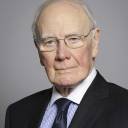 by Michael Meadowcroft Before politics Ming Campbell had successful...
 -
23 December 2025
Annette Brooke -
23 December 2025
Joiners and Leavers -
25 October 2023
Cause and Effect - the background to Hamas terrorism
