
Subcategories
A Article Count: 4
B Article Count: 13
C Article Count: 15
D Article Count: 4
E Article Count: 3
F Article Count: 6
G Article Count: 6
H Article Count: 4
I Article Count: 1
J Article Count: 5
K Article Count: 3
L Article Count: 5
M Article Count: 12
N Article Count: 3
O Article Count: 2
P Article Count: 7
R Article Count: 2
S Article Count: 16
T Article Count: 6
W Article Count: 14
Tony Greaves
Yorkshire Post obituary
 Tony Greaves, who has died suddenly at the age of 78, was a Yorkshireman whose first teaching job took him to Lancashire where he remained, in the borough of Colne. His family lived in Bradford where his father, Geoffrey Greaves, was in the police service as a driving instructor.
Tony gained a scholarship to Bradford Grammar School but the family moved and Tony instead attended Queen Elizabeth's Grammar School in Wakefield. He spoke warmly of his later experience of the school where, in the sixth form, "we debated everything." Through this he gained his interest in politics at a time in the early 1960s when Jo Grimond was an attractive and articulate Liberal leader. By the time Greaves arrived at Hertford College, Oxford, in 1961 to read geography, he had already decided to join the young Liberals.
He taught geography at Colne Grammar School from 1969 to 1974 but it was soon clear that his commitment was going to be to politics rather than to teaching. He was elected to Colne Borough Council and to Lancashire County Council in 1971. He remained a local council member, latterly on the Pendle Borough Council, up to his death. Under his leadership the Liberals and later the Liberal Democrats controlled the council but there was no transfer to parliamentary elections in which he finished third on each of his three contests. After 1974 he made a somewhat precarious living from a succession of politically orientated jobs: organiser of the Association of Liberal Councillors, head of the party's publishing wing and even as a second hand bookseller specialising in Liberal history and theory. Fortunately his schoolteacher wife, Heather, was also a committed Liberal and was herself a long term local councillor.
Greaves' natural radicalism took him to the leadership of the national Young Liberal movement in its "Red Guard" phase and this led him to a number of battles with the party leadership. Youth politics was far more radical and attractive in the late 1960s and the 1970s than today and the 1968 Young Liberal Conference attracted 750 delegates. The Young Liberal influence within the party was most evident when Greaves successfully moved the motion at the 1970 annual party assembly that committed the party to a dual strategy of community politics alongside the parliamentary campaigns.
When David Steel pushed the Liberal party towards a merger with the SDP, Greaves was elected on to the Liberal negotiating team. There followed five months of "physical and mental exhaustion" and he was unable to accept the final package. He spoke in vain against the merger at the subsequent special party assembly but he joined the new party maintaining and arguing from within for "radical Liberal policies" and for a commitment to campaigning at the local level.
He was an unexpected party nominee as a Life Peer and he simply extended his career of promoting activism and key policies to his new sphere of action. Although he dealt conscientiously with parochial matters he had a lifelong concern for national and international issues.
He was intensely loyal to colleagues and adored by those he worked with even though, in the words of a fellow Yorkshire peer, "he could be uncompromising, argumentative, curmudgeonly and stubborn." he took an unexpected pleasure in his family, not least in Robin, the son of Helen and Martin Hamilton, the Director of Leeds Civic Trust. He kept a link with his native Yorkshire by maintaining a season ticket for Bradford Park Avenue football club. Otherwise he relaxed by getting away completely from politics for four weeks annually, until his older years climbing in the French Pyrenees.
In 1968 he married Heather Baxter, who survives him with their two daughters.
Douglas Gabb OBE
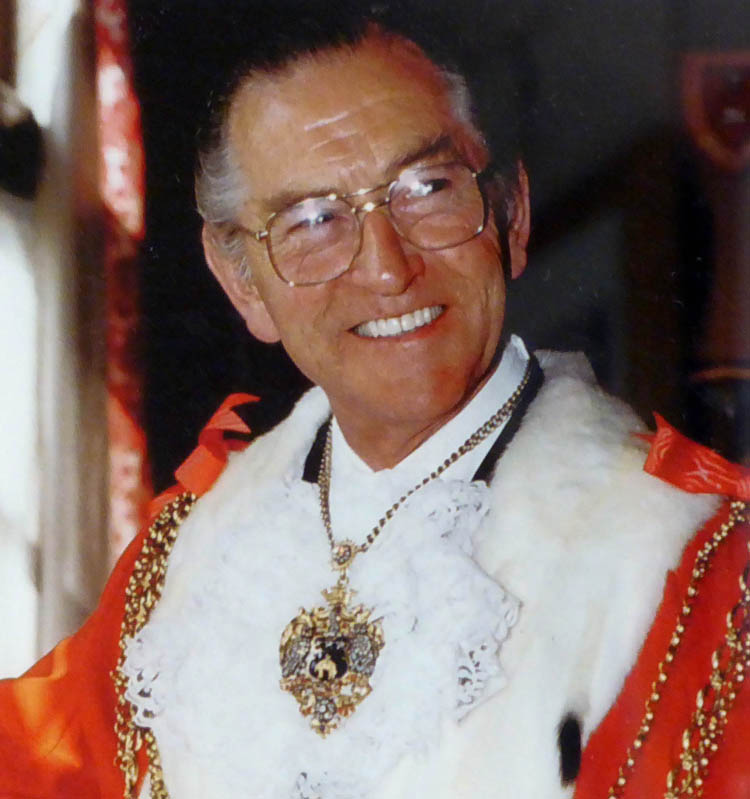 Honorary Alderman Douglas Gabb - Dougie to all his colleagues - has died just one month short of his hundredth birthday. To those in Leeds municipal life he was for forty-five years a constant presence on the Labour benches in the Civic Hall council chamber. His other long term political commitment was as Denis Healey's agent in Leeds South East and later Leeds East for the whole of his forty years in the House of Commons. After he had retired from parliament Healey described Gabb as his "best friend."
Gabb finished his schooling at Kepler School (later Roseville Secondary School) at the age of fourteen. His first job was as a page boy at the Leeds Grand Theatre but he left to fulfil his ambition to become a jockey and was employed in the stables at Newmarket. However, his mother made him return to Leeds to take up an engineering apprenticeship with the Blackburn Aircraft company. Then, after employment at the Yorkshire Copper Works and at the Barnbow ordnance factory, he moved to the University of Leeds where he worked for twenty-six years, latterly as the technician in charge at the Houldsworth School of Engineering. On his retirement he was honoured by the University with the honorary degree of Master of Engineering. Earlier, in 1975, he had been awarded the OBE for his services to local government.
First elected to Leeds City Council for the Osmondthorpe ward in 1954 he became an alderman in 1971; when the office of alderman was abolished in the local government reorganisation of 1974 he returned to the council as councillor for the Seacroft ward, which he retained until he retired in 1999. Shortly afterwards he was created an honorary alderman. Gabb's main council responsibility was as chair of the personnel committee and in 1974 he played a key role in the delicate task of enabling the staff of the different local authorities to be formed into a single department following the amalgamation of the Leeds County Borough with the eight neighbouring borough and district councils. He served as Lord Mayor of the city in 1984-85.
Dougie Gabb was a Labour party member for eighty years and was a formidable battler for the Labour cause and, though he was not a particularly effective public speaker, he could always be relied upon to intervene in support of the party's case in city council meetings, usually to refute opposition accusations. For many years he was secretary of the East Leeds Constituency Labour Party which at the time was regarded as one of the most left wing in the country. As secretary he skilfully managed to avoid being in danger of removal by the party bureaucracy by portraying himself as being on the left though, as one colleague commented, "He would support (in general) left-wing resolutions but took no action on them"! Despite his strong political affiliations he never let them harm his personal relationships with opponents. When interviewed in 2011 and asked what his particular interests were, Dougie typically replied, "Staying alive under the Tory/Liberal coalition government"!
His late wife, Ivy Jones, a Holbeck girl, worked at Montague Burton's Hudson Road factory until they married in 1941. For sixteen years she ran a family newsagent's in Headingley. Ivy died in July 1988. They leave three daughters, eleven grandchildren and great-grandchildren.
Peter Hellyer
 Peter Hellyer was one of that remarkable vintage of radical Young Liberals which flourished in the late 1960s and early 1970s. During little more than a five year period this group played a key role in the formulation of a distinctive “Libertarian Left” ideology which they applied to the highly charged issues of the day, including the Vietnam war, apartheid in South Africa, CND and the peace movement and the plight of the Palestinians. Because when faced with establishment intransigence they took to direct action, not least in successfully stopping the 1970 South Africa Rugby tour, they provoked considerable opposition within the Liberal Party hierarchy who felt, probably correctly, that the Young Liberals’ highly publicised actions were losing the party votes and simply did not know how to cope with a youth movement that had considerable momentum, many thousands of members and constantly showed up the rigidity of Labour’s Young Socialists. Also the Young Liberals’ willingness to campaign alongside others who were sometimes in far more extreme and illiberal organisations who agreed with their stance on a specific issue was often much too pluralistic for the party leaders.
I missed out on involvement in the contemporary Young Liberal Movement being on the party’s staff from 1962 and during the whole period. However, I was often called on to attempt to mediate but given the way that Jeremy Thorpe, the then leader, mishandled the situation and even publicly attacked his own youth movement, all efforts were futile. The rift between the Liberal establishment and the Young Liberal Movement led to the appointment of a three-person Commission of Enquiry being set up in December 1970, chaired by Stephen Terrell, a leading QC and Liberal candidate.1 Possibly because there was no simple formula available to combine discipline with passion its few conclusions came to nothing.
Peter Hellyer was a key participant throughout this period not least as its International Vice-Chairman from 1967 to 1969. Surprisingly, given his capacity for producing beautifully written English in later publications, he did not contribute to the two books of essays published by the Young Liberal movement in 1967 and 1971.2 As a key officer, together with Louis Eaks, another officer of the movement, he visited the Soviet Union at the invitation of the Komsomol - the youth section of the Communist party. They insisted on varying their allotted programme to visit the tomb of Peter Kropotkin, the Russian anarchist, and, in Kiev, they asked party officials to explain the nature of Ukraine’s separate national identity.
Later, key officers of the Young Liberal Movement abandoned it and, somewhat perversely given their trenchant criticisms of the 1966 Labour government, Peter Hain, George Kiloh and, temporarily, Simon Hebditch joined the Labour party, or, as in Hilary Wainwright’s case, left mainstream party politics altogether, or as with Lawrie Freedman, became a knight of the realm and one of the country’s top defence experts and had to steer clear of active politics. Peter Hellyer, however, remained involved with the Liberal Party and, later, the Liberal Democrats. He was as radical as the others on key issues but while they were often more impetuous he was more thoughtful, particularly on the ways and means of achieving change. His approach to politics was in fact similar to that of his Young Liberal colleague, Tony Greaves, but without the occasional irascibility of the latter.
Peter’s connection with the Palestinian cause following the 1967 Arab-Israeli war led him to a deeper involvement with the Arab world and this became his abiding interest. In Sudan met his late wife, an Egyptian of Sudanese-Moroccan heritage, and converted to Islam. In 1975 he was part of a Liberal Party delegation to the recently independent United Arab Emirates (UAE). This visit developed into a deep relationship with the country and he wrote a considerable number of books on the archaeology, natural history and cultural history of the region, living there from 1978, apart from a three year sojourn in London in the 1980s. For some time he also ran the first English language radio station in the UAE and was the editor of its main English language newspaper for more than a decade. He was highly respected in the country and In 2010 he was granted Emirati citizenship. All in all he spent nearly five decades chronicling the history, natural beauty and modern transformation of the UAE.
Peter Hellyer had a remarkable memory and, in the midst of his many commitments in the UAE, he wrote largely from memory what is as yet the more thoughtful and best analytical article on the Young Liberal Movement and that period of some five years, 1966-1971, of radical action and youth involvement in active politics.3
Peter never abandoned his connections with British Liberalism and he would return to the UK for every general election, always to be involved with the campaign in the Scottish Borders alongside David Steel his long term colleague from their Anti-Apartheid days in the 1960s.
Peter Hellyer, born 7 November 1947, died 2 July 2023
[1] Report of the Liberal Commission to the Right Honourable Jeremy Thorpe MP, (Stephen Terrell, John Foot, Gruffydd Evans), 1 July 1971.
[2] Blackpool Essays – towards a radical view of society, ed. Tony Greaves, Gunfire Publications, September 1967; Scarborough Perspectives, ed Bernard Greaves, Young Liberal Movement, September 1971.
[3] The Young Liberals, Peter Hellyer reviews the relationship between the Young Liberal and the left in the 1960s, Peter Hellyer, Journal of Liberal History 67, Summer 2010.
David Hudson
 David Hudson, who has died in an accident at his Wetherby home, aged 80, was the third generation of local Conservative politicians. His grandfather, James David Hudson, was a founder member of the Wetherby Rural District Council in 1897. Previously he had been a produce merchant, exporting cheeses to the United States. He was said to have crossed the Atlantic twelve times in sailing ships. He bought the family home, Hill Top Farm in Wetherby, with proceeds from the sale of a property block in Broadway, New York, in 1861. David's father, Colonel Joseph H Hudson, was a County Councillor for Wetherby and Chairman of the West Riding County Council immediately before its demise in the 1970s. David himself was elected to Wetherby RDC in 1955, to the West Riding County Council in 1967 and to Leeds City Council in 1975. He served as Mayor of Wetherby Town Council and was the Deputy Lord Mayor of Leeds in 1981-82 and Lord Mayor in 2001-02. He also served on the West Yorkshire Police Authority and the West Yorkshire Passenger Transport Authority.
Of all the politicians from the outer areas that became part of Leeds City Council in 1974, David Hudson seemed most at home in the wider city politics. An extremely convivial individual, he took to the formal and informal machinations of the Leeds Civic Hall without any apparent effort and was popular with members of all the political groups. Although ostensibly very relaxed he was not averse to mixing it politically when the need arose and on occasion could be provoked into fierce defence of the Conservative cause. He served for many years on the planning committee and, though there was no suggestion of malpractice, he came under public criticism for alleged conflicts of interest when he obtained planning permission to develop valuable land around the family home. He was Managing Director of the family farm and holiday homes management business.
David Hudson was passionate about cricket, having played for Wetherby Cricket Club from 1943 to 1965, four times captaining the team to the Wetherby and District League title. He was also a keen rugby union player in his youth. He also took a great interest in local hospices, choosing St Gemma's and Martin House for his Lord Mayoral charities. He was one of the last of that style of Conservative land owners and business leaders who believed that it was an important duty to participate in civic life. He finally retired from the City Council at last June's elections.
He married Gillian Barlow in 1954, and they have three daughters, Fiona, Jennifer and Pippa.
Richard Hoggart
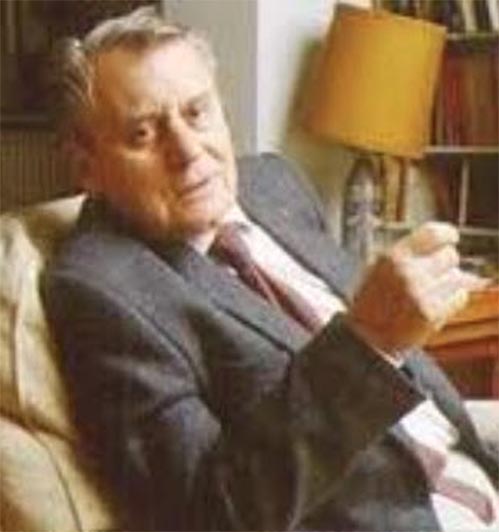 Despite his distinguished academic and literary career, Richard Hoggart, who has died aged 95, was best known for his comments on Lady Chatterley's Lover as a defence witness at the 1960 obscenity trial, and for his seminal work, The Uses of Literacy , on Northern working class life.
Before Hoggart's 1957 book there had been no thorough and sensitive narrative which combined analysis and description of working class culture in a manner which painted its strengths alongside its struggles. Hoggart came directly from the tough back streets of inner city Leeds, made more harsh by the death of his father when he was just eighteen months old, followed by that of his mother when he was seven. Parted from his two siblings, he was brought up by his paternal grandmother in industrial Hunslet.
Thanks to a perceptive and persuasive headteacher, Hoggart gained a scholarship to the local grammar school and from there to Leeds University and a First in English Literature. Twenty years later came The Uses of Literacy which combined a clear recall of his childhood with a mature analysis of its significance. His ability to judge himself appealed to many influential individuals and it became a reference point for much social policy debate.
Hoggart could be blunt, as shown by his comment that "you are bound to be close to people with whom …. you share a lavatory in a common yard," but he was also reflective, as when he wrote that "a writer who is himself from the working classes has his own temptations to error, somewhat different but no less than those from another class. I am from the working classes and feel even now close to them and apart from them. In a few more years this double relationship may not, I suppose, be so apparent to me; but it is bound to affect what I say." Such a doubt may have shaped his personal concerns but his three volumes of autobiography and his books of intimate personal commentary demonstrate that he never lost the ability to relate to his roots.
His testimony for the defence in the 1960 obscenity case against Lady Chatterley's Lover was regarded as the turning point of the trial. To those who expected otherwise of a scion of the working class, his evidence came as a shock, but to those who had read Uses of Literacy it was no surprise. In the book he had carefully differentiated between male "locker room" obscenity and the natural directness of sexual expression. He wrote of his grandmother reading many of the books he brought home when in the sixth form, including D H Lawrence: "much of it she admired, and she was not shocked. But of his descriptions of physical sex she said, 'E makes a lot of fuss and lah-de-dah about it'."
At the trial Hoggart reclaimed explicit sexual language for the "tradition of British Puritanism" that used words for their forthright meaning rather than as macho obscenities. Mervyn Griffith-Jones QC , the prosecution counsel, had clearly not been prepared for Hoggart's line of defence and the prosecution case slowly unwound until the jury's not guilty verdict became inevitable. Hoggart wrote later: "The judge and Griffith-Jones were a well-matched pair; both seemed to think they were trying not so much a book as Lady Chatterley herself, for letting down her class; and Mellors for getting above himself (and by getting on top of her.)"
Following wartime service in North Africa and in Italy with the Royal Artillery he returned to the first of a series of academic posts, including inaugurating the Centre for Contemporary Cultural Studies at Birmingham University and a five year stint as Assistant Director-General of UNESCO, the United Nation's cultural and educational agency. At the latter he took charge of a number of heritage projects and his autobiography records many of his clashes with bureaucracy and corruption. He tells of being in the VIP lounge at Moscow's Sheremetyevo airport when a Soviet Deputy Foreign Minister tried to give him a "fat envelope of roubles for 'incidental expenses'. This was one of the oldest tricks in the book. The packet went back and forward until I asked my interpreter to buy champagne for everyone in the lounge. The minister and the interpreter thought that a nice move."
Richard Hoggart was regarded as a "safe pair of hands" and was in great demand as a member of government committees, but his open recognition of media "dumbing down" was explicit, even if qualified by a typical Hoggart reticence: "I don't read or watch them myself but if they want the popular press as we have it, or the trashier programmes on television who am I to regret or judge their tastes. That's democracy." Tony Benn records, however, that after such comments "Wilson thought Richard Hoggart unacceptable as a BBC Governor."
Richard Hoggart differed from his fellow working class Leeds authors in that, whereas they tended to emphasise the ludicrous and the comic, he was an academic who observed society with a watchful eye and a sensitive ear. He wore his learning and achievements lightly and regarded them as a means to a positive end. His writings draw out warmth rather than whimsy and enabled those who knew the conditions and the humanity that he described to feel that he respected them and saw the potential in those constrained by their circumstances.
He leaves a wife, Mary, whom he married in 1942, their son: Simon, a prominent Guardian journalist died in January, their second son, Paul, is a television critic, and their daughter, Nicola, a specialist Special Needs teacher.
Pat Hawes
 Pat Hawes was very much a British jazz pioneer. He was a talented pianist who could play in just about every style, including boogie, stride and ragtime. He produced fine solos and his playing was always tailored to the musicians around him and he was a sensitive accompanist when supporting soloists. I enjoyed Jim Godbolt's anecdote about Pat in the second volume of his History of Jazz in Britain: "In the early days .... pianists were expected to pound the piano with both fists in crude imitation of the more primitive New Orleans style. The general attitude can be summed up by the horrified reaction of a pianist - Pat Hawes - in a 'pure' New Orleans-style band on being asked by a recording engineer to play a bit higher up the keyboard: 'Wot, and sound like f***ing Teddy Wilson?'"
At the age of fifteen he won a competition playing boogie-woogie before playing briefly around his home area of Pinner in a local dance band. He joined John Haim's band and recorded with him in 1946. Pat played and recorded with just about every major British band but never stayed with any single band more than a few years. His two periods with the Crane River band, from 1949 to 1953 and in its revival from 1972 to 1975, were just about his longest stays with any band. Between times he led his own trio and, particularly in the 1970s and 1980s , did a great deal of solo work. He took part in bands accompanying visiting jazzmen Albert Nicholas, Captain John Handy and George Probert. He recorded two sessions under his own name, firstly in 1996 and his final recordings in 2000. This latter session was entitled "That Salty Dog" and featured Pat singing the title number, plus other rare vocals!
Pat was a very amenable and easy going colleague who was always anxious to please. Despite his long and distinguished record he never stood on ceremony but happily did just about any gig. He did a Thames river boat gig for my Granny Lee band in 2001 making the trek from Maidenhead just weeks after he had collapsed in the street with a heart attack. He made light of this "episode" and the only concession he made to his health was to insist that there was a piano on board as he had had "to give up carting keyboards and amplifiers around."
In his later years Pat wrote excellent reviews for Jazz Journal and for this journal and it was only when these ceased to appear that I, and no doubt other friends, realised that he was ill. His presence and his playing are much missed.
Patrick Vernon Hawes, born 29 July 1928, died April 2017
Albert Ingham
 Political party agents once had public status as individuals who carried out professional duties that were important to the exercise of democracy. That esteem has been considerably undermined over the past 30 years by the advent of the adman, the campaign manager and the candidate’s “minder”, Albert Ingham was one of the last links with the old school of agent and, whilst always being receptive to new ideas and techniques, was rightly always proud of the profession that had occupied his entire working life.
Albert Ingham began his professional career immediately after the war in 1918, being appointed to the Elland Divisional Liberal Association staff. From early on he was recognised as a skilful organiser and diplomat and was often sent by party headquarters into difficult situations as a troubleshooter. This took him to East Anglia and to Lancashire before returning to Yorkshire in 1936 as agent for the Colne Valley Liberal Association.
He was so much part of the Yorkshire party scene that it was often not realised how wide his service had been. I once commented to him how difficult it must have been for the Preston Liberals in 1929 when Sir William Jowitt defected to Labour immediately after the election in order to become Attorney General in the second Labour Government. Ingham replied: “You don’t have to tell me — I was his agent!”.
At the outbreak of war in 1939 he went to work with the YMCA in support of members of the forces. At the end of the war he took on the job of Secretary to the Yorkshire Liberal Federation, a post he held, including a spell as Chief Agent, until his retirement in 1967. Thereafter he took on a new lease of life as probably the most experienced amateur worker and fund-raiser at general, municipal and by-elections. Though small in stature he was impossible to ignore as a campaigner and was held in immense affection by everyone in the party, not least for his remarkable skill for being in the right place at the right time to appear in press photographs.
His Liberalism was deep and passionate: he always described himself as a Radical. He was a constant spotter of talent and supporter of younger colleagues, many of whom he encouraged to become parliamentary candidates before they themselves recognised their own abilities.
Albert Ingham, political agent, born Rochdale 4 May 1901, MBE 1979, married 1922 Minnie Sellen (died 1981; one daughter, and one daughter deceased), died Leeds 13 April 1990.
Nigel Jones
Trevor Jones
An appreciation for Liberal History Journal
 The death of Trevor Jones on 8 September 2016 signals the demise of one of the most remarkable electoral campaigners in modern political history. It was his skill and drive that delivered Liberal control of Liverpool City Council and which produced a number of the by-election successes that rescued the party from its 1970 depths. At that election it had fewer votes and seats than today but, after five by-election victories and the early burgeoning of community politics, it reached almost 20% of the vote by the February 1974 election.
The bare statistics of the Liverpool successes were remarkable, following, as they did, Trevor's first victory in 1970, when he joined Cyril Carr as the second Liberal Councillor, and led to control of the City Council a bare three years later. The context of this transformation is significant and remarkable in that they were achieved in a city that had a very sparse Liberal tradition. Even in the halcyon year of 1906, only two of the city's nine constituencies returned Liberal MPs and Liberals had not controlled the City Council since 1895. Two Liberal MPs were elected for the one year 1923-4 but otherwise it was unremitting gloom for many years. There were single local ward victories in 1946 and 1947, without Conservative opposition, and the last lingering Liberal alderman came off the council in 1955. Liverpool politics were additionally stacked against Liberals by the dimension of religious alliances. The strong Catholic population identified itself with Labour and, until local government reorganisation in 1973, there was a Protestant party which regularly held two wards - without Conservative opposition.
There was not even more than a smattering of Liberal clubs, with only the Kildonan and Garmoyle institutes - the latter still in party hands. Even so, the mighty handful of Liberal stalwarts, such as Beryl Hands, Warwick Haggart, Albert Globe, Fred Bilson and Russell Dyson, maintained a Liberal presence during the dark years. Cyril Carr had gained Church ward at a by-election early in 1962, at which Labour had turned down an appeal to withdraw its candidate but mysteriously failed to submit a valid nomination paper. Significantly there was no additional success in Church ward until 1967 - the year of Trevor Jones' first contest in the City.
Trevor Jones was born in Denbighshire, North Wales, but his family moved to Bootle soon after. He went to the local grammar school but left at the age of fourteen. Then, concealing his age, he joined the Merchant Navy and served on the Atlantic convoys, about which Nicholas Montserrat wrote do vividly in The Cruel Sea. At the end of the war he was in Singapore where the sight of emaciated Allied prisoners being released from the Changi prison camp had a great effect on him. Back in Liverpool he married Doreen Brown in 1950. She was also to become a Liberal councillor and Lord Mayor. After working on the docks for some years he borrowed £200 to buy the business which eventually became a successful ship's chandlery.
It was the threat of demolition of one of his warehouses to make way for a new road that was the eventual catalyst for his involvement in politics. He took his campaign, with typical Jones' leaflets, all the way to the House of Lords. He then realised that only political involvement could have long-term effects. His instinctive affinity for the underdog, plus his Welsh roots, led him to join the Liberals and neither its single-figure national poll rating nor the fact of having only one City Councillor out of 160 council members, inhibited him. Two second places followed in 1968 and 1969 until he joined Cyril Carr the following year, gaining Church ward. Cyril and Trevor were completely different but, with more tolerance on both sides, could have been complementary. Cyril was a thoughtful lawyer with a long Liberal heritage and always acted with care, whereas Trevor leapt in with the telling phrase and sharp repartee. Trevor was initially loyal to Cyril's leadership but they fell out after the Liberals had gained control of the new Metropolitan City Council in 1973 and Trevor retired to the back benches. Each of them had their adherents and, despite attempts to cover up the split, it was inevitably difficult to run the City Council. Cyril refused to resign the leadership but eventually his declining health made it necessary and Trevor duly took over.
He did not inaugurate the name "Focus" for the now ubiquitous leaflets but he popularised its use and latched on to its frequent appearance on the streets as a way of localising Liberal campaigns. Trevor saw it as a tool to use everywhere and was frustrated that the national party was, he felt, too respectable to promote it. He therefore decided to stand for election as the party's president and used his "Focus" techniques around the country successfully in 1973 to defeat Penelope Jessel, the leadership's candidate.
Trevor then engineered his most remarkable election coup. He had got involved in the pending by-election in Sutton and Cheam before being elected as party president. On the face of it this was nowhere near a possible Liberal victory. The party had polled only 6% at the April 1970 Greater London Council election and barely saved its deposit at the General Election two months later. But there was a new, young candidate in place, Graham Tope, who readily agreed to Trevor using his new techniques at the by-election. Trevor took over the whole campaign with astonishing energy. He would pick on local issues, producing all the leaflets and election material in Liverpool and then driving down to Sutton with his Triumph Stag stuffed full of Focus leaflets which the local helpers then delivered. The final result in Sutton and Cheam was a Liberal victory by over 7,000 votes, conjured out of nowhere by Trevor. Other by-elections followed, usually with Trevor much involved, and with greatly increased Liberal votes and with a number of Liberal victories. He once told me that he had voted in every by-election he had been involved with!
Perhaps the most curious aspect of Trevor's undoubted skills was the failure to deliver parliamentary victories in Liverpool - including his own candidature in Toxteth in which he finished a poor third. He then tried for the candidature in Orpington following Eric Lubbock's 1970 defeat but Kina Lubbock, Eric's wife was preferred. He had one further parliamentary campaign, in Gillingham, but again finished third. He then concentrated on Liverpool and was Council leader at the time of the Toxteth riots, which upset him greatly. In 1981 he was knighted for his services to local government, but the title he much preferred was "Jones the Vote" which combined his Welsh origins and his electoral skills.
Trevor was certainly not an easy colleague. He was intensely loyal and committed but he had little time for those who did not accept his strategy. He remained popular not least because he was so effective. An instinctive Liberal he was a strategist and a campaigner rather than a great thinker. He was fierce with those who stood in his way and this applied to the SDP who stood against Liberal candidates, thus ensuring a number of Labour victories and opening the door to the disaster of Militant. Trevor was fearless in standing up to their Councillors. On one occasion he so riled Derek Hatton, Militant's key man, that Hatton shouted, "I'll dance on your grave." Trevor replied, "That's fine by me - I'm going to be buried at sea." His refusal to give way to the SDP meant that Liverpool Broadgreen was one of only three constituencies contested by both Liberal and SDP candidates at the 1983 General Election. When in March 1987 forty-seven Militant councillors were disqualified, the Liberals came back into control and Trevor was once again leader of the council, albeit very briefly.
Trevor Jones' policy achievements in office were slim and his passion always seemed to be more for the thrill of Liberal election victories rather than for political power. Very unusually, Trevor's municipal leadership and the amazing, if somewhat capricious, Liberal municipal successes in Liverpool were based primarily on his remarkable organisational abilities and his ability to grasp tactical opportunities. It is for these skills that he is warmly remembered by his Liberal colleagues.
Sir Trevor Jones
Guardian obituary
Sir Trevor Jones, who has died at the age of 89, formalised and finessed the Liberals' practice of community politics. He was not its originator, indeed he was far too practical to be a theorist, but he developed the brash leaflet based on local issues that electors' identified with. Delivered with great frequency during and between elections, it was at his first election that Trevor Jones that gave it the name of "Focus" which became ubiquitous, as it still is, for Liberals and, later, Liberal Democrats. As an organiser he had phenomenal energy and ambitions to match. First elected in 1968, he was the dominant Liberal influence in his beloved city of Liverpool until he retired in 1991. He clearly found it difficult to be away from the action and he returned to the city council in 2003 for a further six years.
Owen Trevor Jones was born in a North Wales village in December 1926 but his family moved to Bootle when he was young enough to acquire his clear Liverpool accent. He went to the local grammar school but left in 1940 at the age of fourteen. He then managed to conceal his age in order to join the Merchant Navy and served on the vulnerable Atlantic convoys that were essential to Britain's survival. He later served in Aden and was in Singapore at the end of the war. Seeing the emaciated Allied prisoners being released from the infamous Changi prison camp had a great effect on him. He married Doreen Brown in 1950. After the war he worked on the Liverpool docks until, in 1961, he borrowed £200 to buy a business dock fenders, which protect boats from dock sides. He built this up and diversified into other businesses, including a ships' chandlery.
Six years into his business life one of his warehouse was threatened with demolition to make way for a new through road. Trevor set about organising opposition and designing campaigning leaflets. Then, following an appearance before a House of Lords select committee to argue for conservation and against wholesale replanning in Liverpool, he turned to the political process as the way to influence decisions. His affinity with the underdog, and his Welsh roots, led him to join the Liberals, who at the time were barely above single figures in the polls. Within two years he joined Cyril Carr as the second Liberal on the city council. Trevor Jones and Cyril Carr were completely different but complementary. Cyril was a thoughtful lawyer with a long Liberal heritage who acted always with care, whereas Trevor leapt in with the telling phrase and sharp repartee. Trevor was initially loyal to Cyril's leadership until they fell out later in 1973, and at first he served as his deputy when the Liberals won control following local government reorganisation in 1973. Carr gave up the leadership in 1975 on health grounds leaving the way for Trevor Jones. In 1973 Trevor Jones was also elected to the new Merseyside Metropolitan County Council and led the Liberal group there. Amongst the new city councillors was Trevor's wife, Doreen.
Having established a strong Liberal bridgehead in a northern industrial city, based on community politics, he was frustrated that the national party's official lip service to this strategy was belied by its respectable image, typified by its then president, Stephen Terrell, a highly respected barrister with a distinguished war record, but who had openly criticised the young liberals' radicalism. Typically, after Terrell's year of office, Trevor decided to contest the presidency against the leadership's nominee, Penelope Jessel. He toured the country, distributed his "Focus" leaflets and romped home.
Even while he was campaigning for the presidency, he had got involved in the pending by-election in the Sutton and Cheam constituency. The party was at 8% in the polls nationally and locally it had struggled to hold its deposit at the previous election and when it adopted Graham Tope as its prospective candidate the local association was delighted to have a young liberal activist who had not been put off by polling only 6% there at the 1970 Greater London Council election. Thus, when Trevor approached him and asked if he would use his techniques Graham Tope agreed, realising that he had nothing to lose. Trevor took over the whole campaign with astonishing energy. He would pick on local issues and then produce all the leaflets and election material in Liverpool and drive down to Sutton with his Triumph Stag stuffed full of Focus leaflets which the local helpers then delivered. It was rumoured that the famous "Liverpool mattress" made its appearance in the leaflets, allegedly being transported by Trevor and dumped in order to be photographed and then publicly removed. When Des Wilson fought Hove a short time afterwards he said that Trevor was driving him around when an elderly lady tripped and fell while on a pedestrian crossing. Trevor slammed on the brakes and leapt out of the car, grabbing a camera on the way. He then photographed the uneven surface before attending to the lady! "It will look good on a leaflet," he commented. He once told me that he had voted in every by-election he had been involved in!
The final result in Sutton and Cheam was a Liberal victory by over 7,000 votes, conjured out of nowhere by Trevor. It was entirely a community politics campaign but, as Graham Tope has admitted, it was all faked - the actual community work did not begin until after the election. On the same day as Sutton and Cheam the Liberal candidate in Uxbridge, with a traditional campaign, polled just 10%. Other by-elections followed, usually with Trevor much involved, and with greatly increased Liberal votes with a number of victories, including Liverpool Edge Hill with his close colleague, David Alton.
Trevor Jones himself fought two parliamentary elections in 1974 - one, Toxteth in Liverpool, was theoretically ideal for his style but he finished a poor third. He commented that he had spent too much time campaigning for other candidates. He then tried to be adopted for the Orpington seat, narrowly lost by Eric Lubbock in 1970, but Eric's wife was preferred. Trevor then contested Gillingham but again finished third. Thereafter he concentrated on Liverpool city council and was leader of the council at the time of the Toxteth riots which upset him greatly. In 1981 he was knighted for his services to local government. However, the title he preferred was the one that combined his Welsh origins and his political skills - "Jones the Vote."
Trevor was never an easy colleague. He was intensely loyal and committed but he had little time for those did not accept his strategy. He retained his popularity not least because he was so effective. He was fierce with those who stood in his way. This applied to the SDP who stood against Liberal candidates in Liverpool and who, by splitting the vote, ensured enough Labour victories to put them in control and opened the door to the disaster of Militant. Trevor was fearless in standing up to their councillors. On one occasion he so riled Derek Hatton, Militant's key man, that Hatton shouted, "I'll dance on your grave." Trevor replied, "That's fine by me - I'm going to be buried at sea." When in March 1987 forty-seven Militant councillors were disqualified the Liberals came back into control and Trevor was again leader of the council. Having been a casualty of Militant's iconoclastic gestures, the office of Lord Mayor was reintroduced and was taken by Lady Doreen Jones. His refusal to give way to the SDP meant that Liverpool Broadgreen was one of only three seats contested by both Liberal and SDP candidates at the 1983 general election.
Unusually in politics, Trevor's municipal leadership was based chiefly on his remarkable organisational abilities and it is for these skills above all that he is remembered by his Liberal colleagues.
Trevor Jones, born 17 December 1927, died 8 September 2016. He leaves his wife, Doreen, and a son, Glyn and a daughter, Louise.
An extended version of that published in The Guardian on 24 September 2016.
Recently added...
-
Menzies (Ming) Campbell
23 December 2025
 by Michael Meadowcroft Before politics Ming Campbell had successful...
 -
23 December 2025
Annette Brooke -
23 December 2025
Joiners and Leavers -
25 October 2023
Cause and Effect - the background to Hamas terrorism

© Elizabeth Bee & Michael Meadowcroft, 2026